



Kapital ist gefährdet. Sie können Ihr gesamtes Investment verlieren. Die vollständigen Risikohinweise finden Sie hier.
On July 28, it was confirmed (as speculated in an article written at the start of July) that the US has had met the standard definition of a recession: two quarters of negative GDP growth.
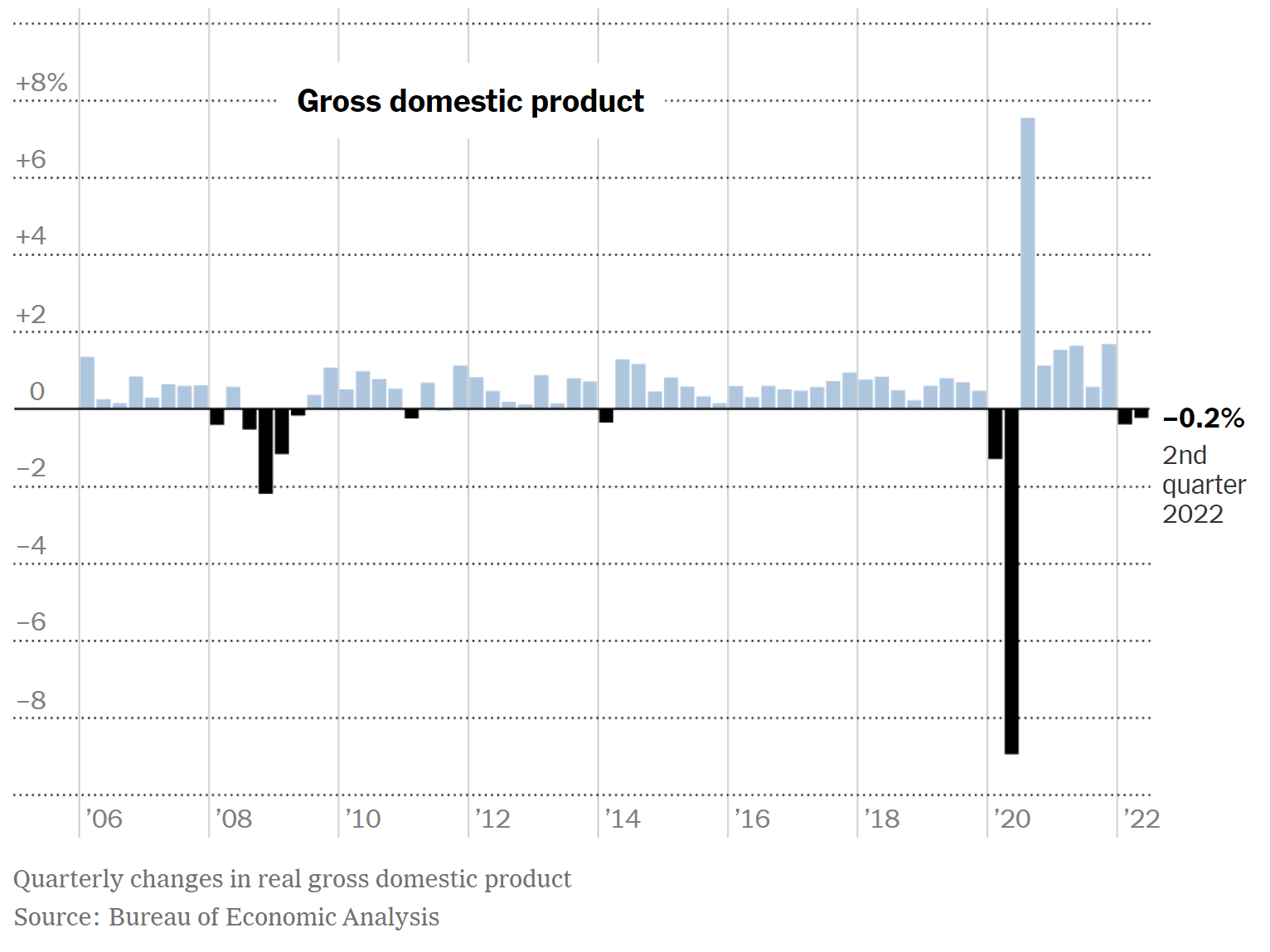
The phrase "standard definition" is necessary here since President Biden’s Council of Economic Advisers have been working on disavowing this definition by stating that this is “neither the official definition nor the way economists evaluate the state of the business cycle” and pointed out that the National Bureau of Economic Research (NBER) is the “official recession scorekeeper.” However, the NBER earmarks recessionary periods from a purely retrospective perspective, i.e. a specific committee looks at past data to call out if a recession has happened or not. It doesn't work with real-time data.
In Q2, the following factors influenced the fall:
Consumer spending, a major component of the economy, rose only 1% on an annualized basis and showed a substantial slowdown from previous months.
Home construction ("residential fixed investment"), sagged 14% at an annual rate.
Companies added to their inventories more slowly in the second quarter than in the first.
Business construction dropped by 11.7% on an annual basis.
Federal government spending shrank 3.2% on an annual basis while defense spending grew 2.5% due to military aid being delivered to Ukraine.
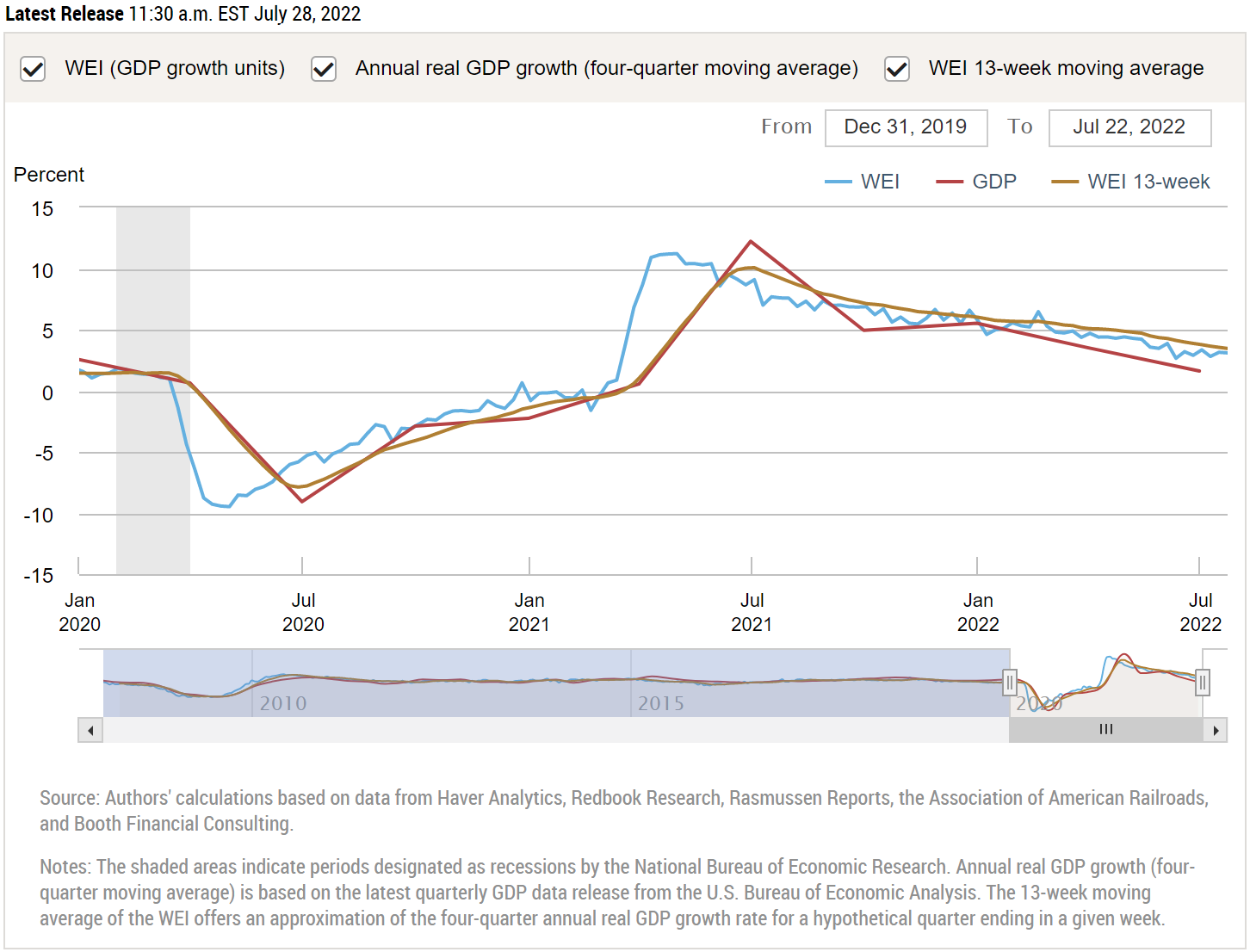
The Federal Reserve System's US Weekly Economic Index (WEI) confirms a long trend in the GDP continuing to slip in line with the WEI:
The Federal Reserve System also calculates the 3-month rolling wage growth through population surveys. The latest survey shows that the cost of employing college degree holders, hourly wage earners and in the prime ages are unified in trending upwards, just as with the unified average. This confirms that strong inflationary pressures haven't abated yet and likely won't abate any time soon.
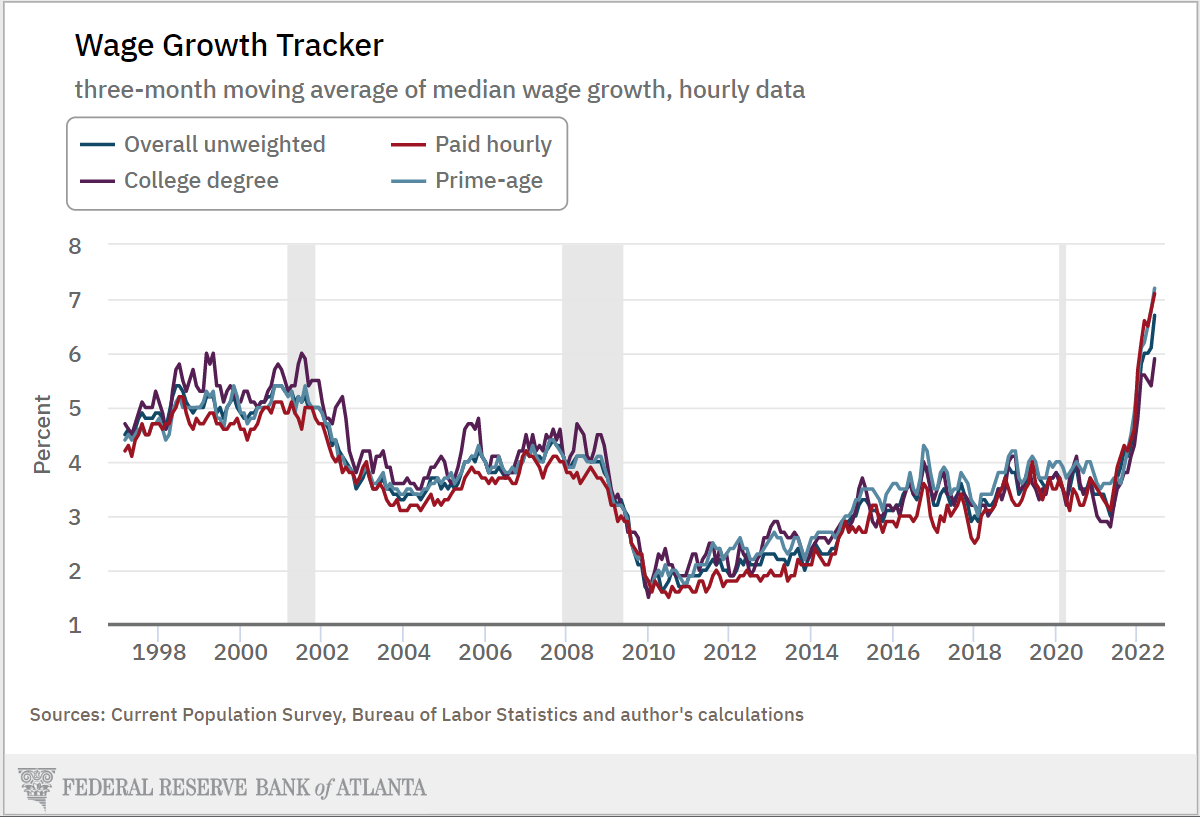
These trends indicate to critics of the current US administration's unilateral "redefinition" of the recession as well as to long-time macroeconomic watchers that Q3 will also face downward pressure, thus confirming further the recession in "standard/technical" terms. Said critics are also aligning this unusual attempt at "recession redefinition" with the upcoming mid-term elections in the U.S. where the current administration is widely expected to receive a drubbing.
The S&P 500 has registered rises for two straight weeks: at 3.4% for the week of July 22 and 4.1% for the most recent week. For the same two periods, the Nasdaq-100 rose by 4.4% and 5% respectively. Some might be inclined to consider this to be signs of a market recovery. However, momentum analysis in the S&P 500 shows energy stocks being the foremost contributor to this rise in the past week:
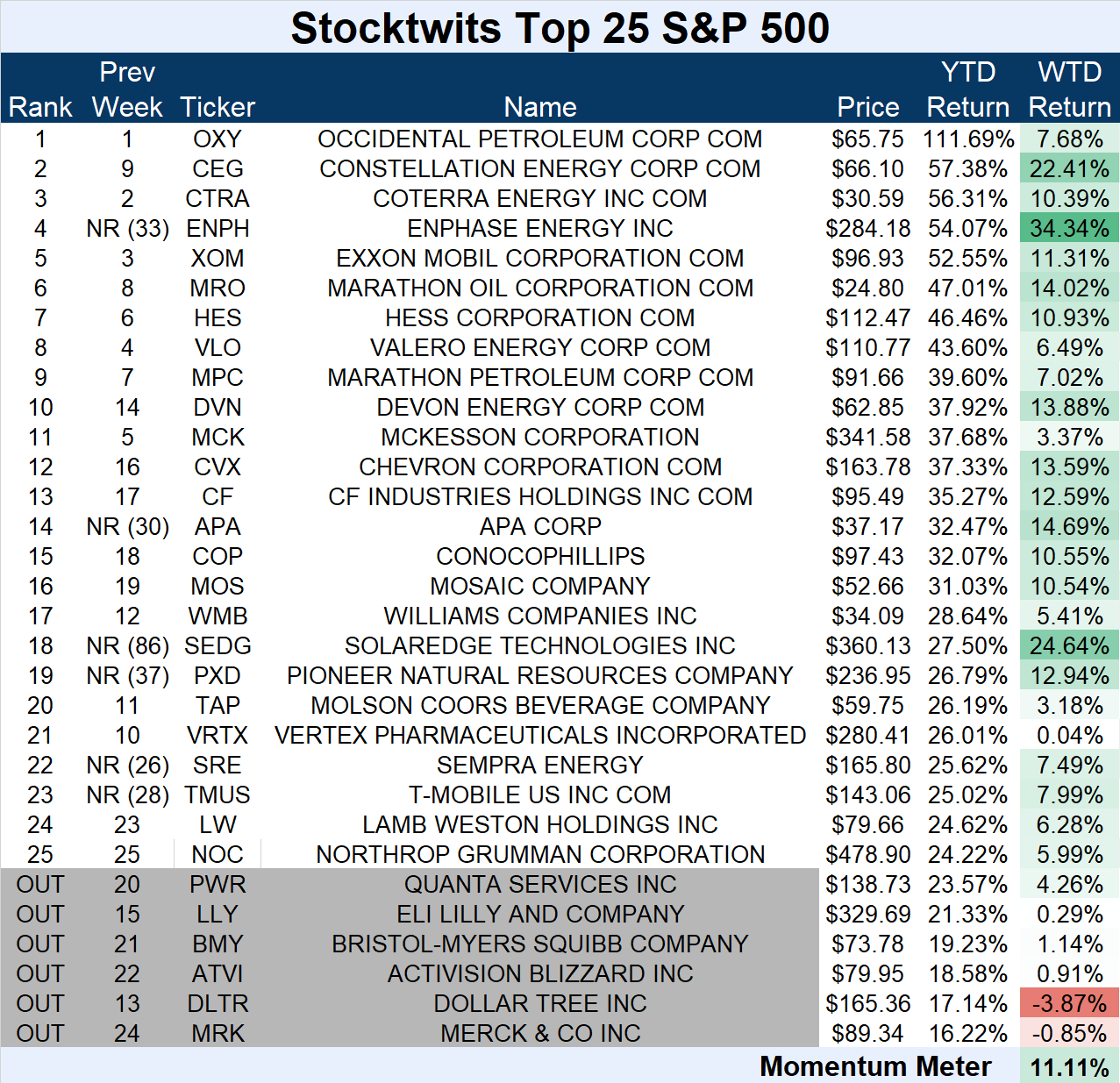
Even the "tech-heavy" Nasdaq-100 has a preponderance of energy stocks, which contributed handily to the index's rise in the past week: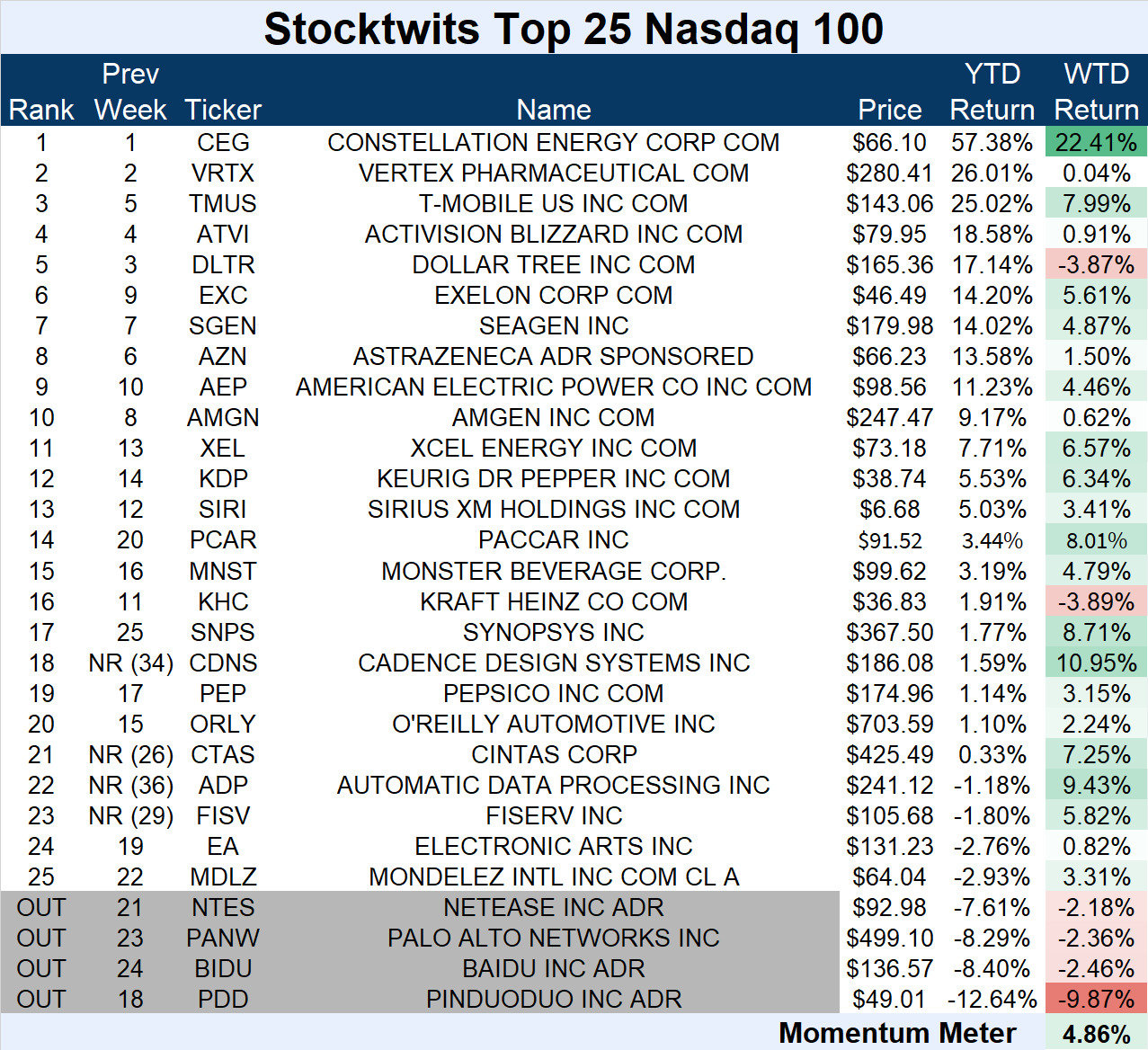
The return of energy stocks' prominence is an interesting phenomenon. In the U.S., average petrol prices (or "gas prices" as the Americans call it) have been trending downwards, although it's still a long way away from average prices a year ago:
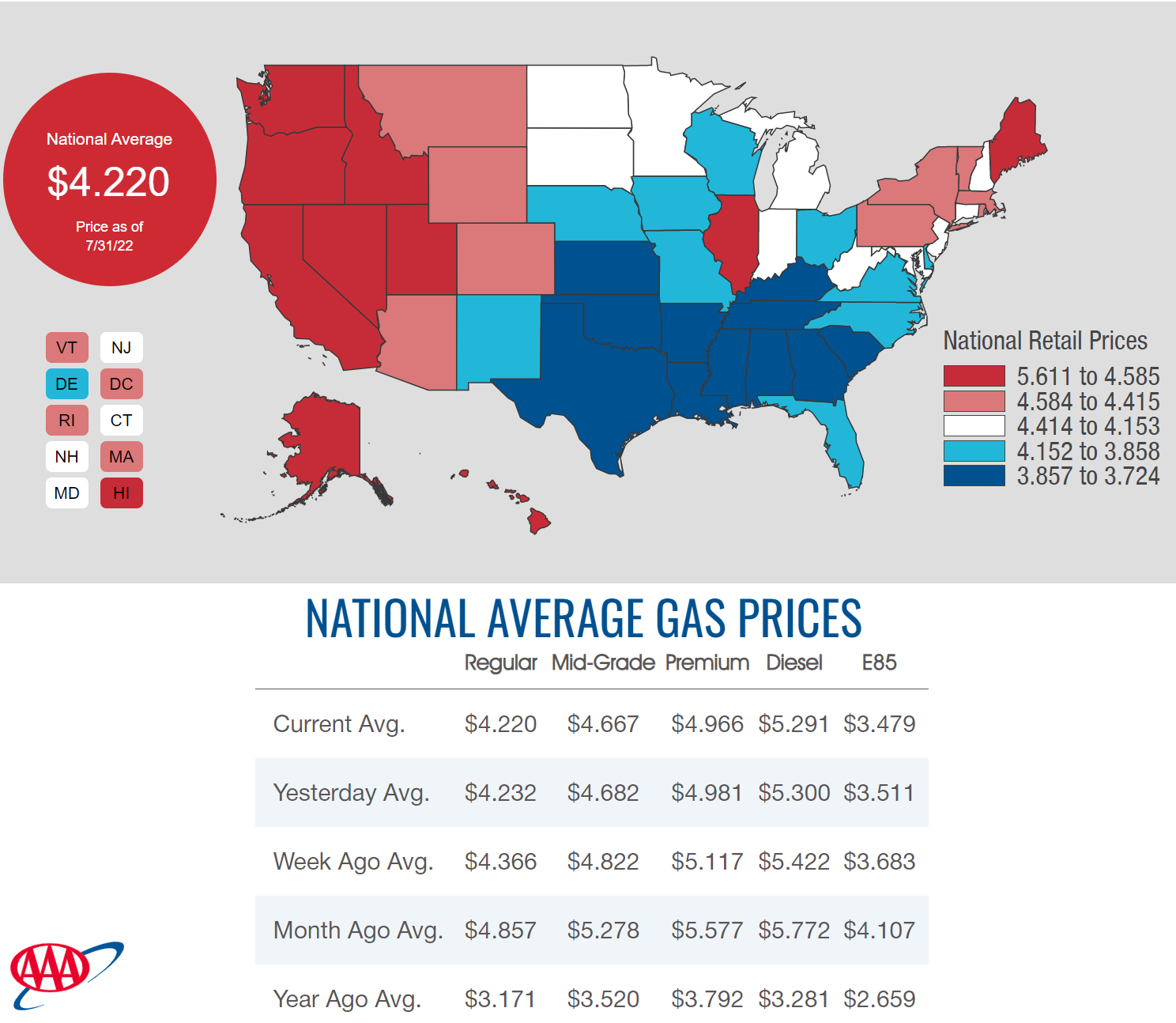
There are a number of seemingly confusing signals here. If petrol prices are falling, then energy stocks shouldn't be rising: energy companies generally show fairly consistent PE Ratios, barring discovery of new energy deposits. Also, if there are signs of market recovery, tech stocks would be leading the charge. Given that consumer staples and health care stocks - both of which are "recession favourites" - have been lagging in the past week, this might mean that the market expects the inflationary phase of the inflation/recession cycle to continue.
Lower earnings from rising wages, ongoing staff cuts across large companies and falling real estate prices from steadily weakening demand confirm that Q3 is poised to be a period of negative growth in the U.S., which strengthens the case for calling out the current situation to be a recession. While the US Federal Reserve continues to promise steady rate hikes in small increments (which is keeping the stock market buoyant), rising energy stock prices indicate a forward-looking expectation of rising petrol prices which means a continuation of the year's trend of decreasing household savings.
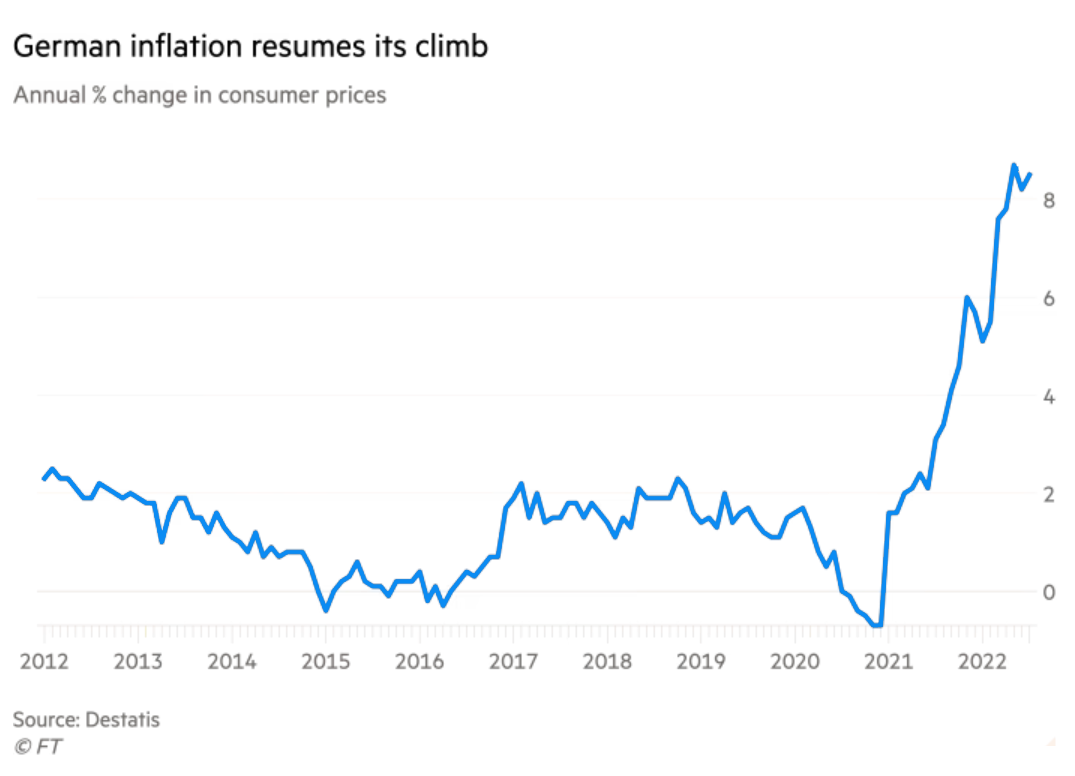
Meanwhile, the Eurozone isn't in recession as per the "standard definition": in Q2, the region's Gross Domestic Product (GDP) rose by 0.7%. However, inflation in the year till July was up by 8.9%, higher than the 8.6% registered in June. This is primarily on account of a 40% rise in energy prices and a 10% increase in food prices, owing to the region's historically heavy reliance on Russia and Ukraine to meet these material requirements. The technical "safe" rating is being attributed to "reopening effects" on the region's hospitality sector after movement restrictions due to the pandemic were lifted and tourism increased. Germany is the worst-impacted country in the Eurozone with inflation in food prices alone in the year till July reaching 14.8% (up from 12.7% in the previous month).
Energy will continue to be a major factor in inflationary pressure for the Eurozone: Russian energy major Gazprom has announced that natural gas flows through the "Nord Stream 1" pipeline to Germany would slow to just 20% of their "normal" level.
This week will likely see a lot of churn as market participants factor in the aforementioned considerations. It might be a little early for making positional trades but, in terms of tactical trading for profit collection, it's a very opportune period.
Learn more about Exchange Traded Products providing exposure on either the upside or the downside to US Oil, the upside or the downside to the S&P 500, the upside or the downside to the Nasdaq-100, and the upside or the downside to the German DAX.
Kapital ist gefährdet. Sie können Ihr gesamtes Investment verlieren. Die vollständigen Risikohinweise finden Sie hier.
 Market Insights

