- Leverage & Inverse ETPs
- Instruments
- White Label
- Why Us
Your capital is at risk if you invest. You could lose all your investment. Please see the full risk warning here.
For its September update of its iconic Fund Manager Survey (which has been covered before), Bank of America, 212 panellists managing $616 billion in Assets Under Management (AUM) participated and provided some fascinating (and prescient) insight.
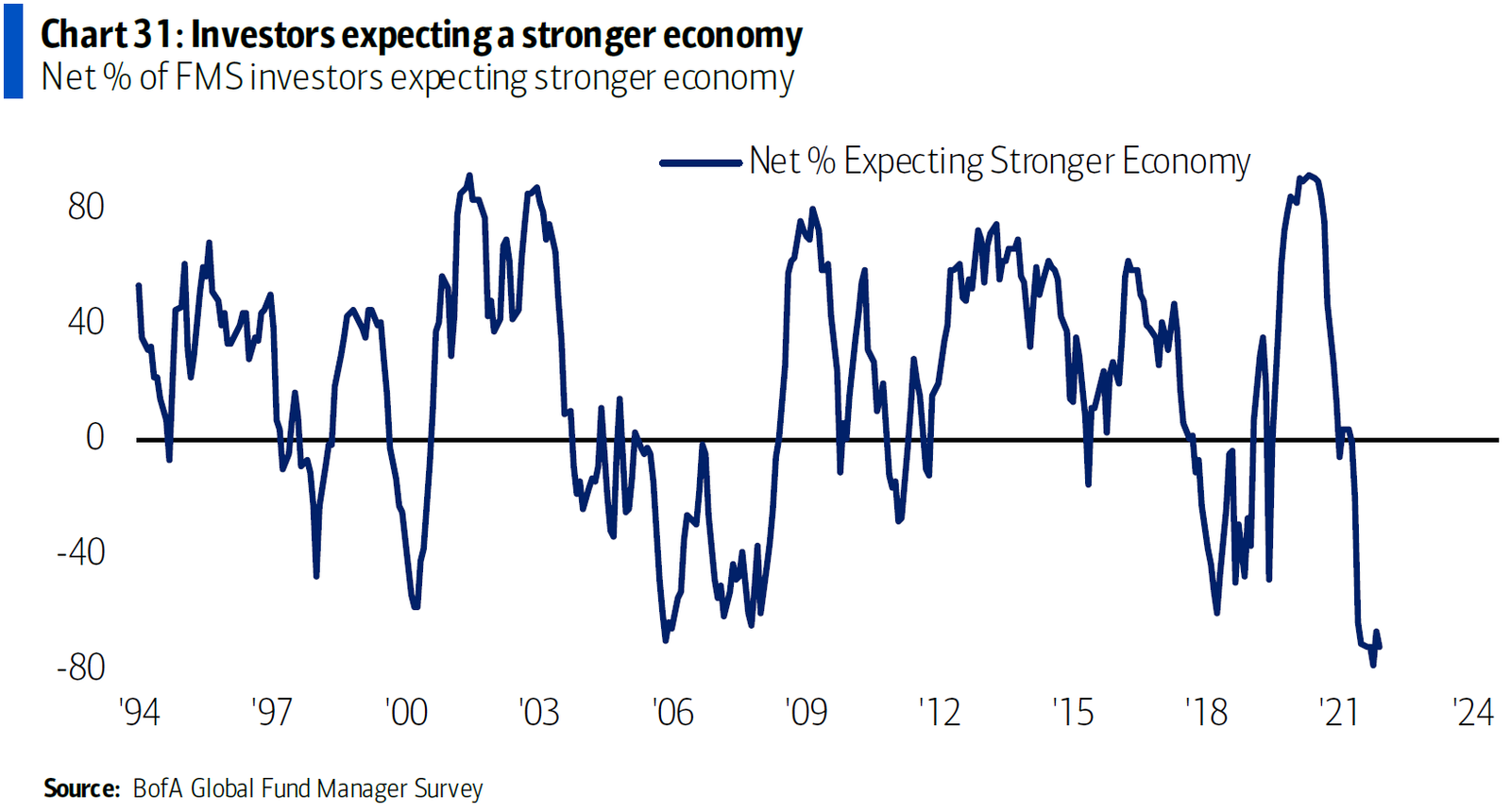
Over the past two months, the percentage of respondents expecting a weaker economy in the next 12 months has increased by 5% since the last survey.
Websim is the retail division of Intermonte, the primary intermediary of the Italian stock exchange for institutional investors. Leverage Shares often features in its speculative analysis based on macros/fundamentals. However, the information is published in Italian. To provide better information for our non-Italian investors, we bring to you a quick translation of the analysis they present to Italian retail investors. To ensure rapid delivery, text in the charts will not be translated. The views expressed here are of Websim. Leverage Shares in no way endorses these views. If you are unsure about the suitability of an investment, please seek financial advice. View the original at
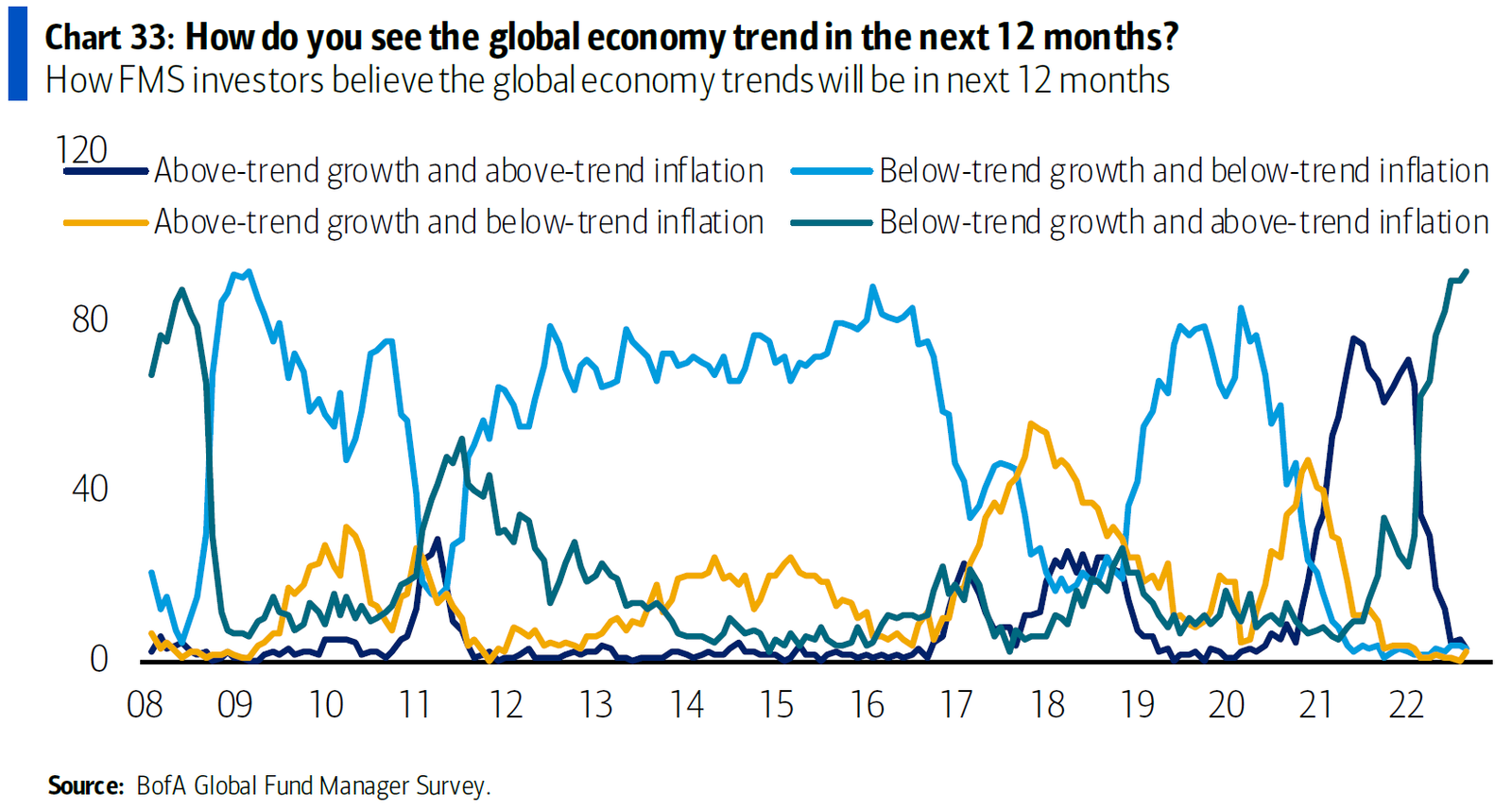
“Stagflation” expectations, i.e. below-trend growth and above-trend inflation, are now at a record high.
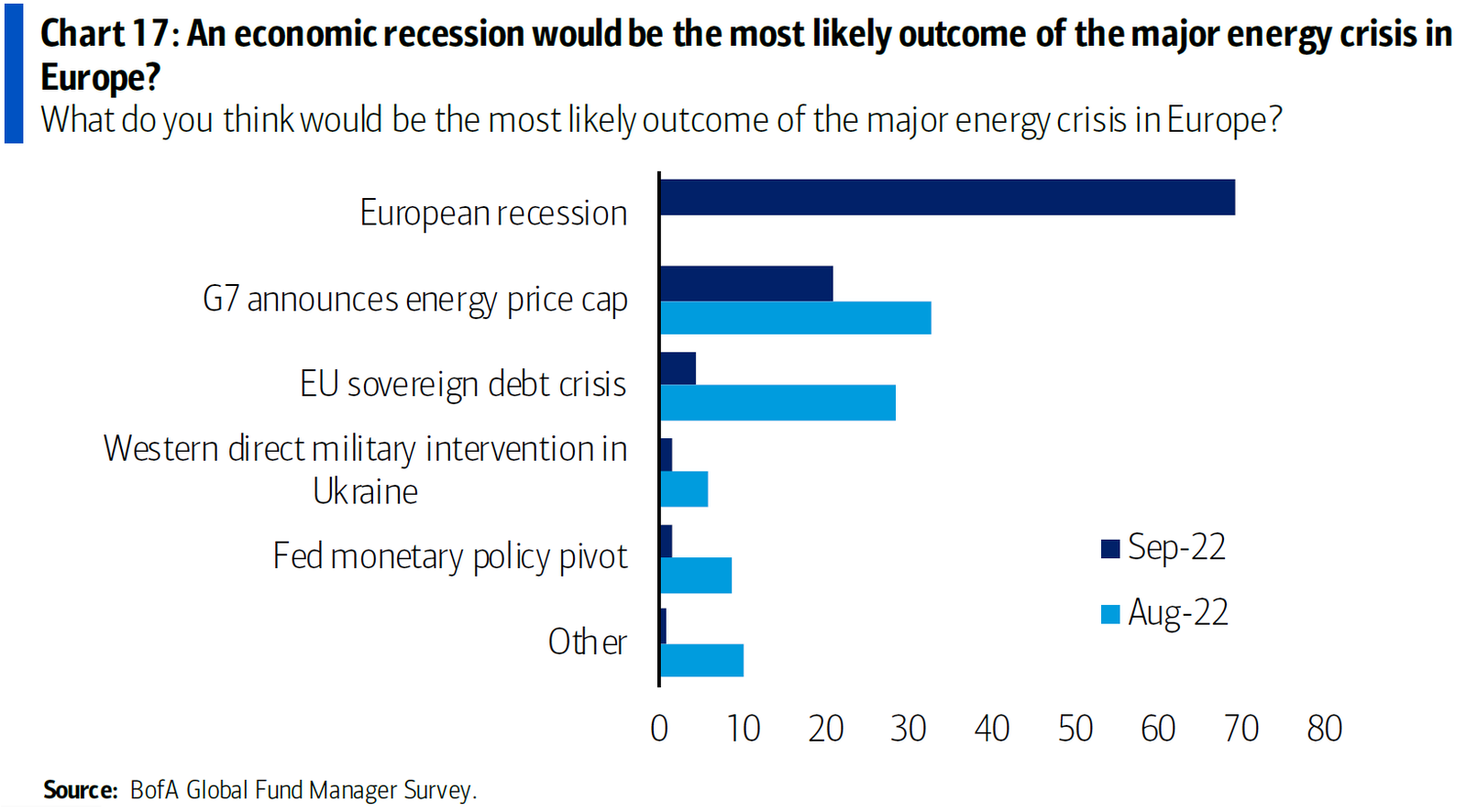
With regard to the Eurozone, the survey records a recession to be most likely as a result of the energy crisis (as predicted in previous articles).
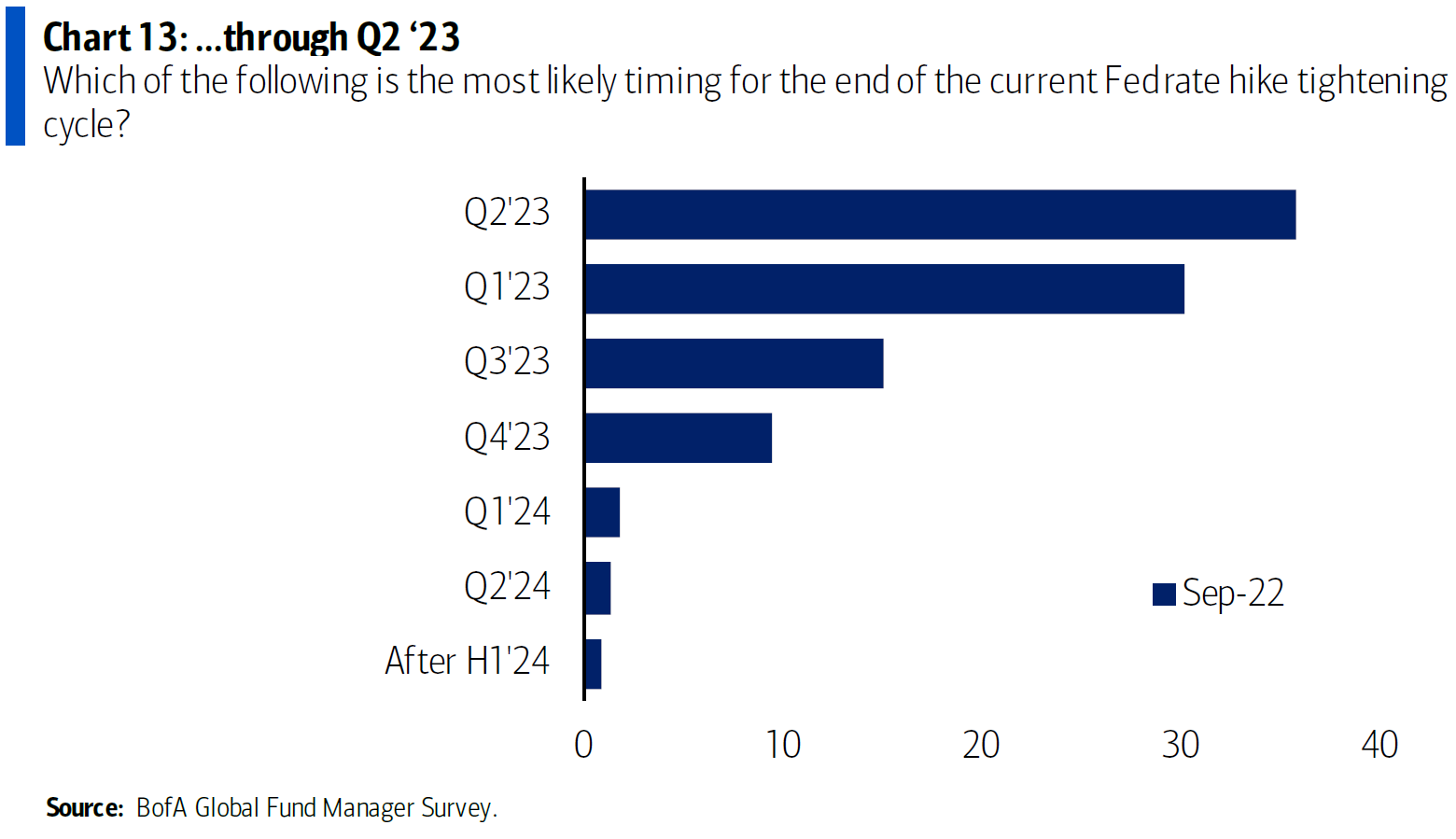
Now, over in the US, the Fed Rate hike is pinned as a major influence on market direction: the higher the rates, the lower the market goes. The survey was held a little before the current 75 bps rate hike was done to bring the rates to the 3% to 3.25% range. A majority of the respondents indicate an expectation of the rate to go even further to the 4 – 4.25% range.

An overwhelming majority of the respondents expect this to happen all through 2023, with the largest set of expectations at the Q1 and Q2 periods.
The survey respondents also reported their asset allocation to stocks at all-time lows. It bears noting that “allocation” here means a long-term conviction that holding on to the asset is a “value builder”.
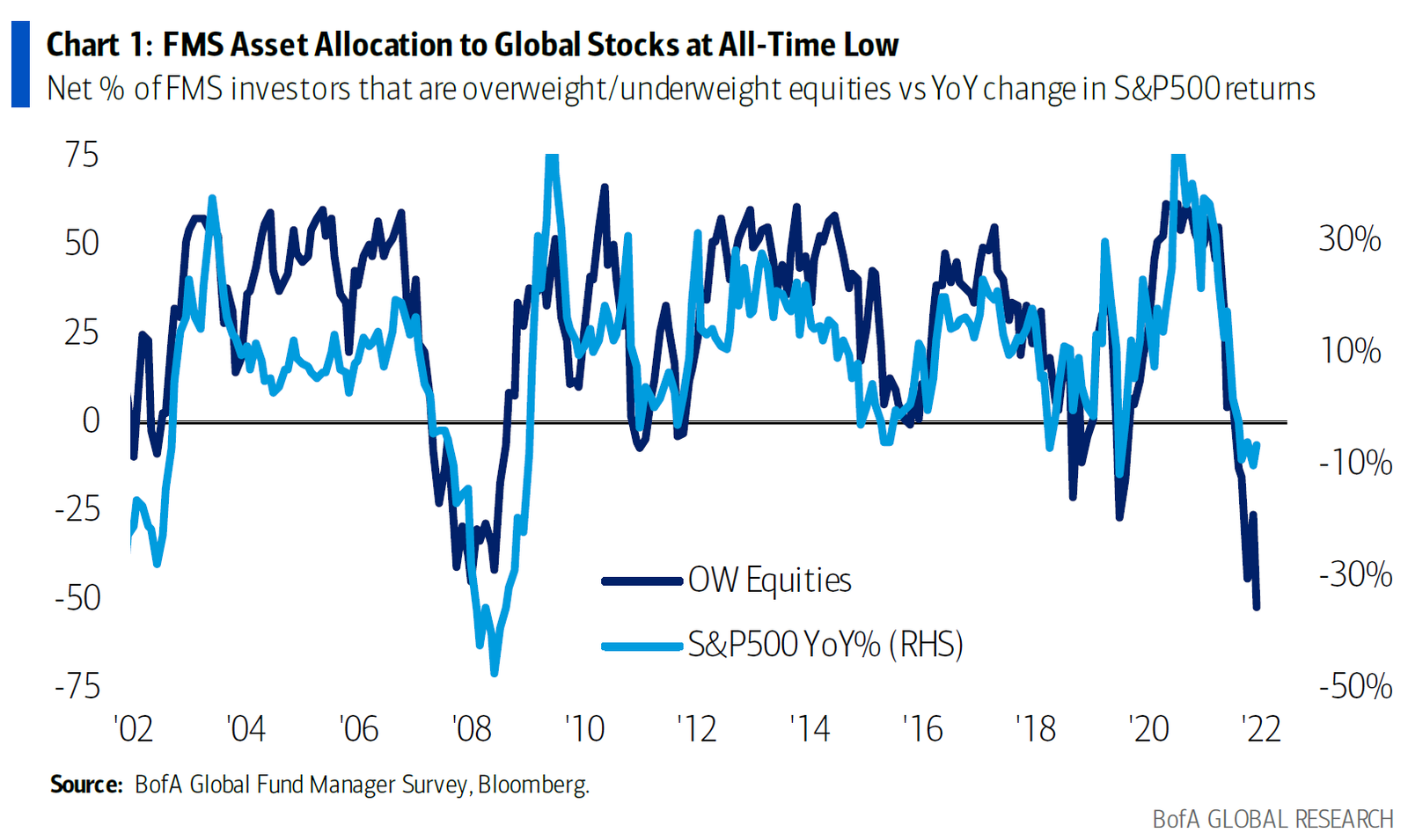
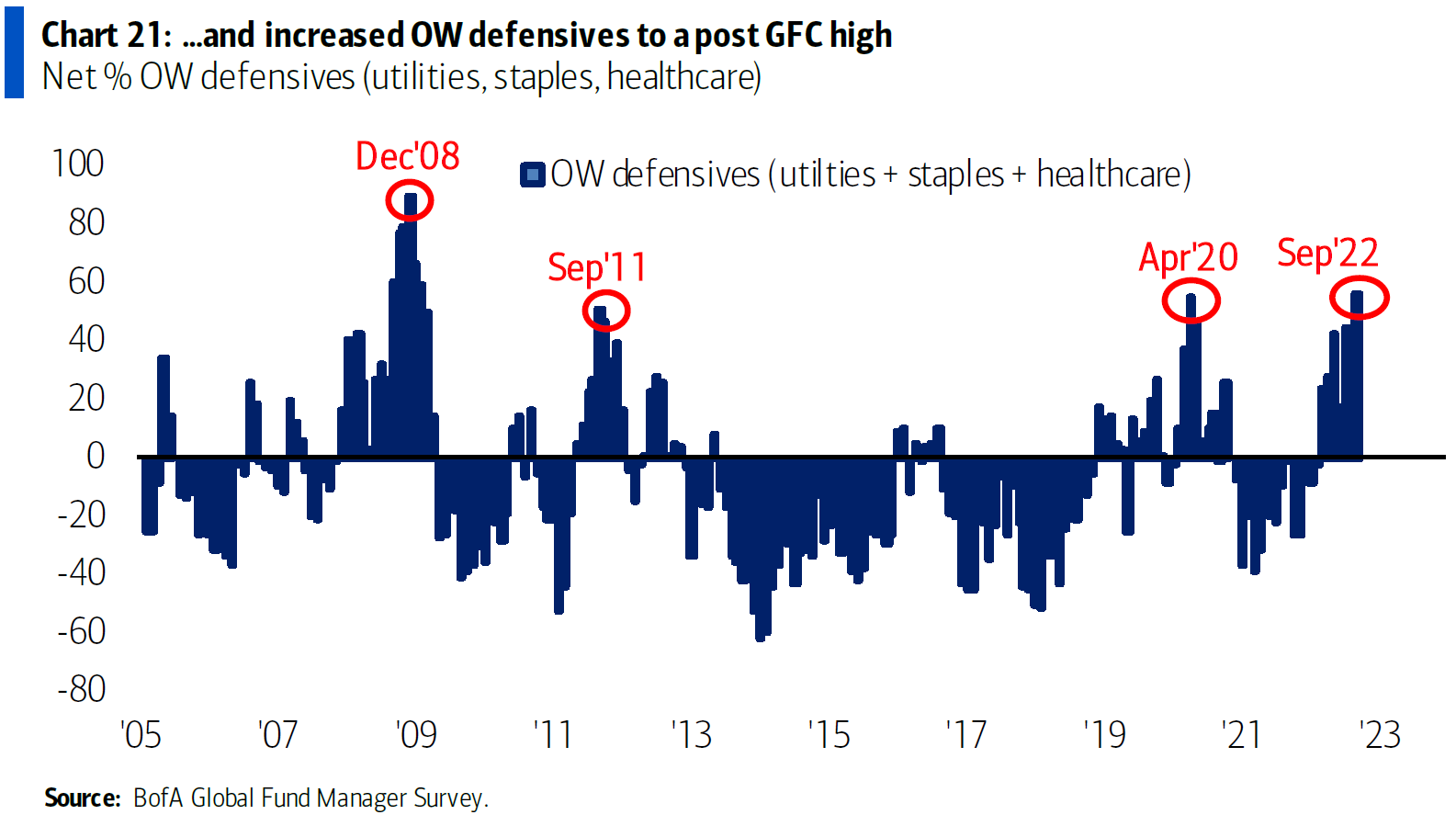
In terms of stock holdings, however, survey respondents indicate that they’re increasing their holdings in “defensives”, i.e. utilities, staples and healthcare stocks.
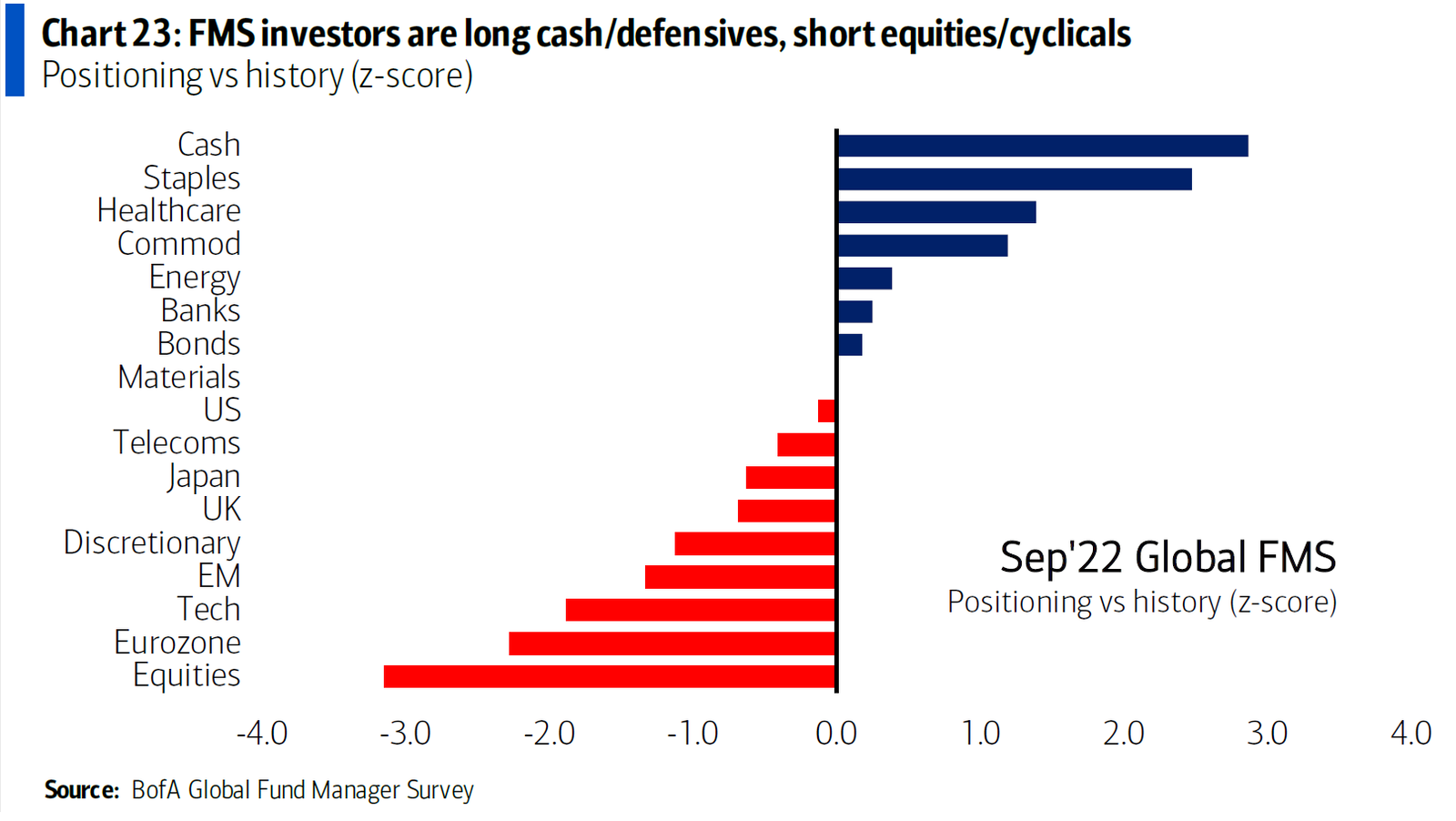
Outside of equities in general, two sectors/supersectors considered to perform especially badly would be both Eurozone and tech stocks (i.e. generally, the likes of Apple and Google).

Last week, Mr. Jurrien Timmer, Director of Global Macro at Fidelity Management Research (FMR), made an interesting estimation: after the FOMC update was delivered, the forward-looking fair value for the S&P 500 dropped to 14X Forward Earnings Per Share (EPS) that day, which was 15% below that day’s level. If earnings growth ends up being flat (at $219) instead of growing +10%, fair value declines by 36%.
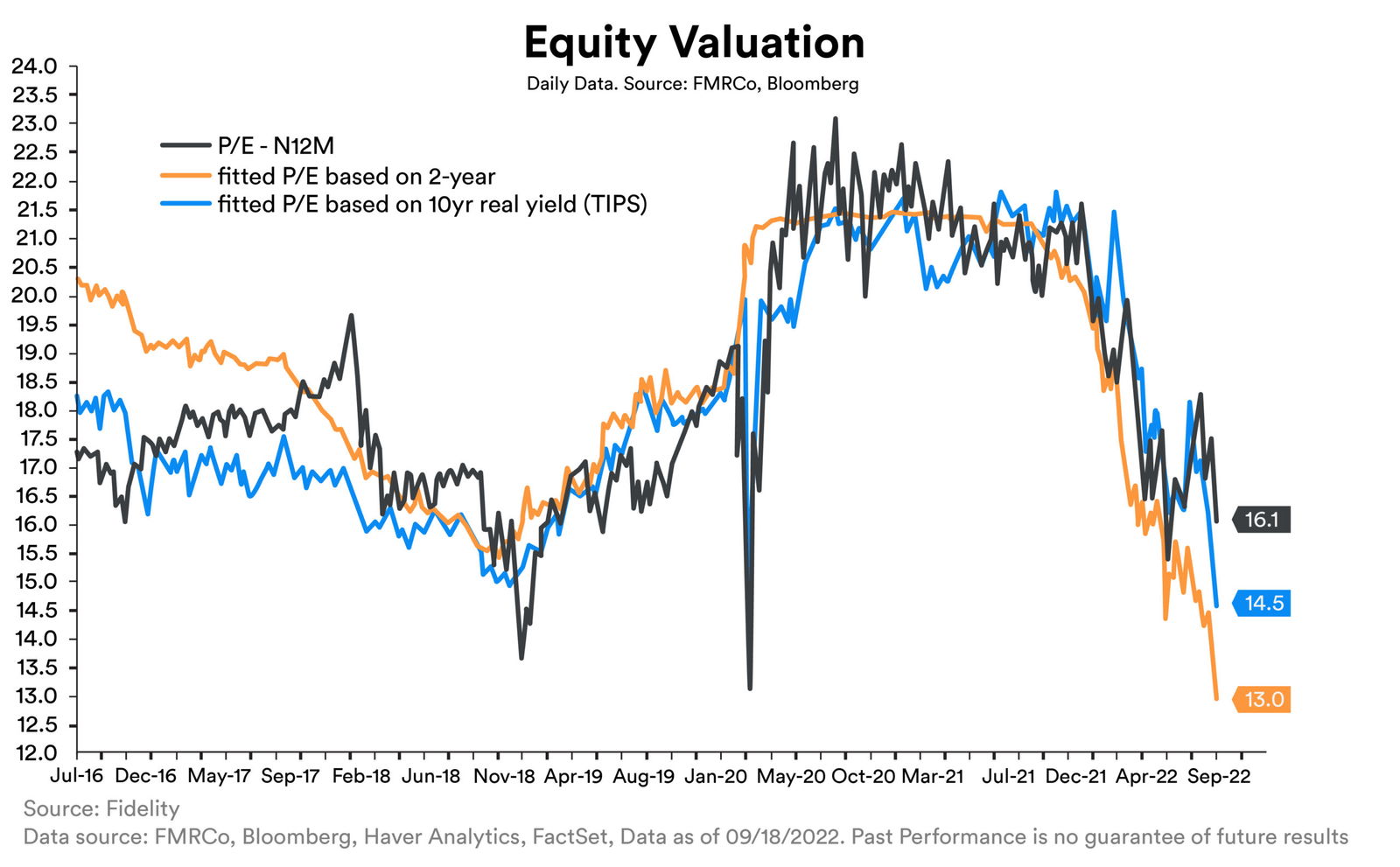
Mr Timmer further stated that equities have seen little outflow, and money markets have seen very little inflow since February 2020. While bond funds & ETFs have seen more material outflows, investors will capitulate and start exiting if the stock market goes down to 3500. The 3500 level is around 5% away from the current day’s level.
Goldman Sachs also indicated last week a familiar theme from earlier articles: the price ratio multiples are rapidly crumbling, as exemplified in the downward trend in the S&P 500’s forward multiples.
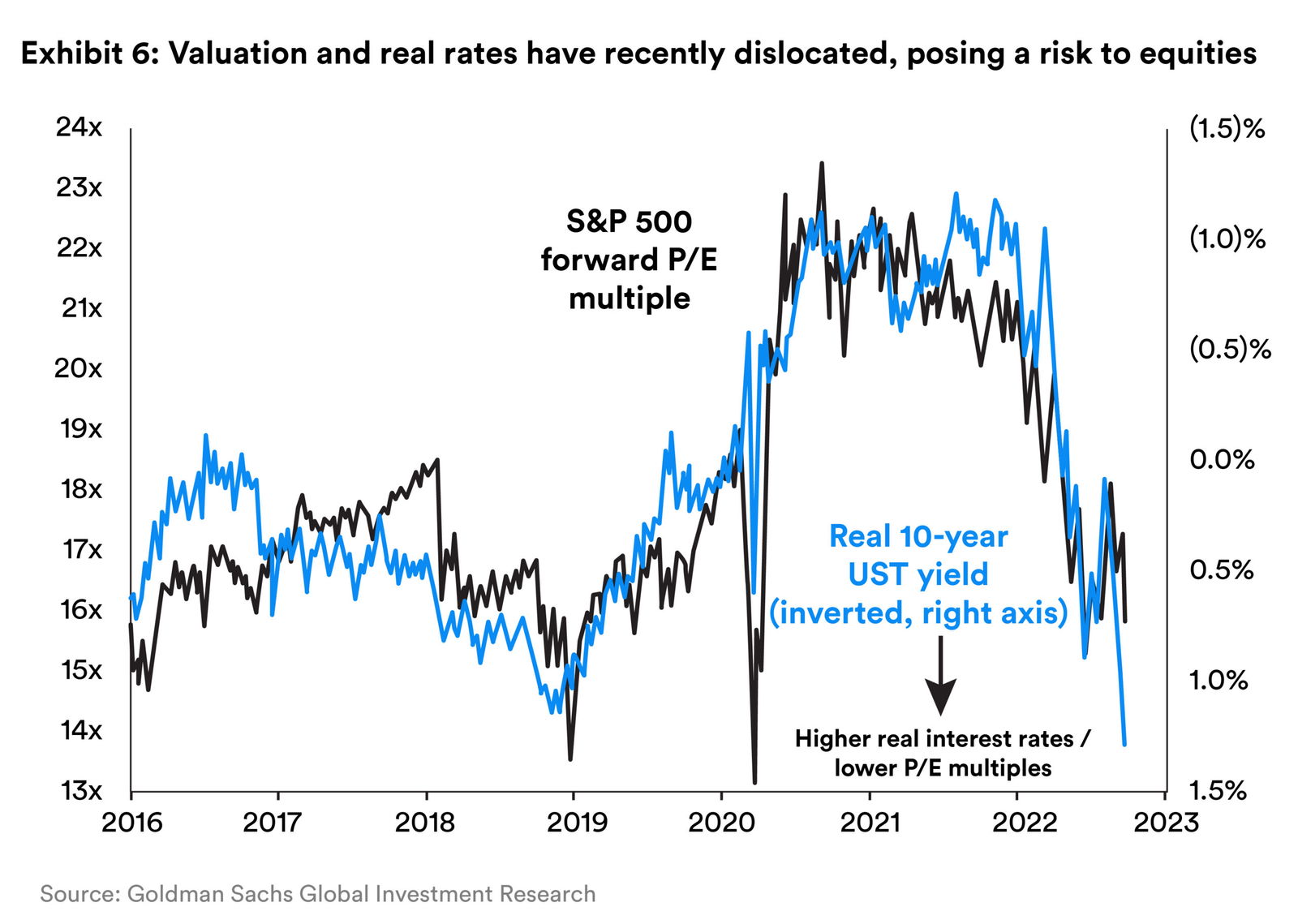
Furthermore, Goldman Sachs estimates that there will be no GDP growth in the US for the calendar year 2022 while 2023 might see a 1.1% increase.

With regard to the S&P 500, Goldman Sachs also had a similar assessment: the index is expected to end 2022 roughly 1.6% away from the current day’s level in a “soft landing” scenario and at 3400 in the “hard landing” scenario. Both scenarios see a recovery in 2023 which would still be far below highs seen earlier this year.

Researchers at Citi warned last week that the Eurozone, Brazil and Canada will be entering recessionary periods in Q4 or shortly thereafter.
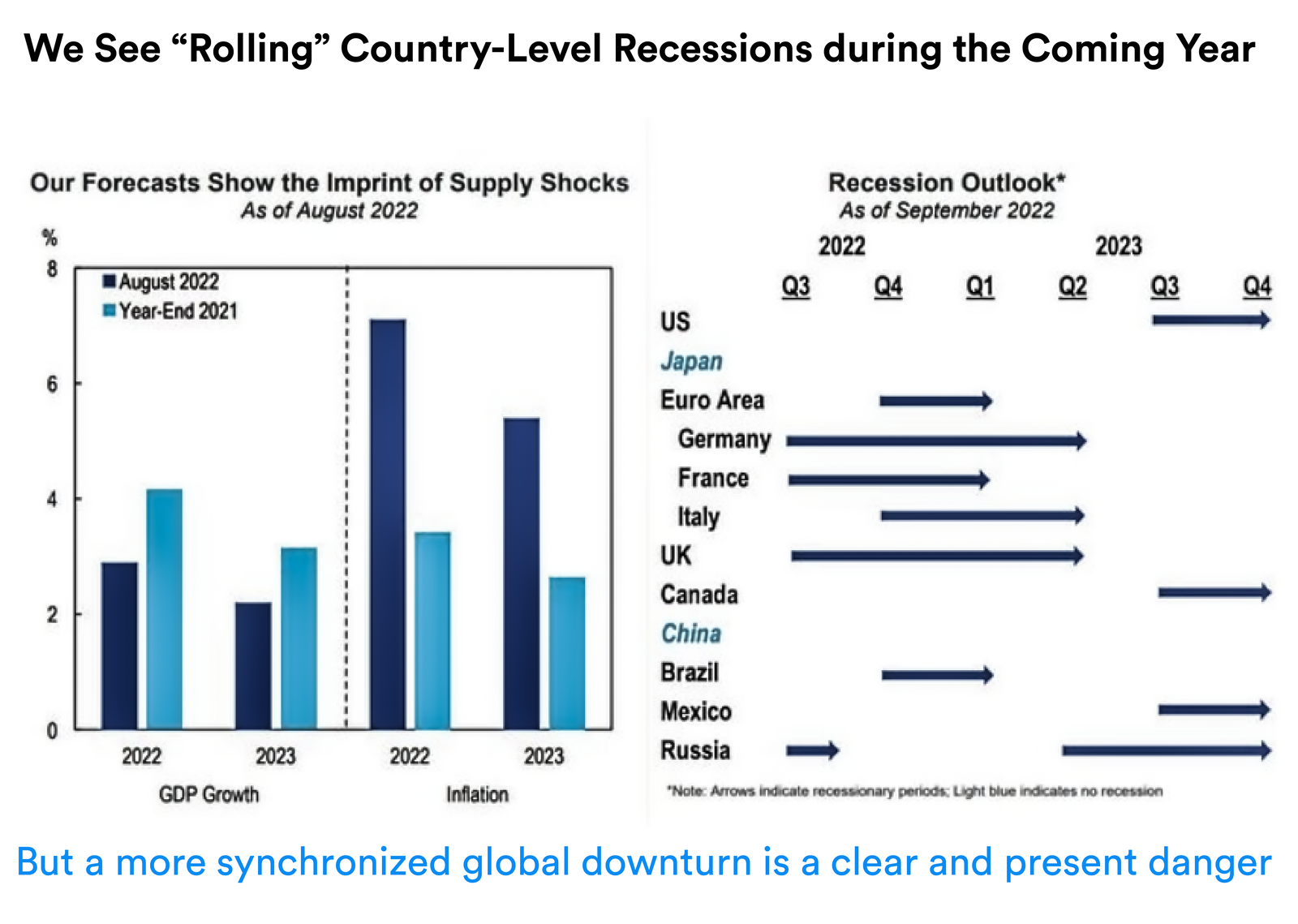
The researchers, interestingly, estimate the U.S. to be entering a “recessionary period” from Q3 of 2023 onwards, while Germany and UK are both indicated to already be in recession.
Also interesting is the conclusion that China isn’t in recession. While it’s entirely conceivable that the Chinese government will be loathe to declare it, estimates from its own Customs Bureau indicate exports to the U.S. (one of its largest trading partners) shrinking as consumption outlook diminishes. Infrastructure and exports are two very important pillars of the Chinese economy. However, it’s possible that there isn’t nearly enough reliable data right now for the researchers to make any prognostications about China.
Also, a report from Deutsche Bank last week indicates that its homeland Germany will likely be bearing the brunt of GDP shrinkage in the Eurozone in the next year.

The sampling of outlooks offered via the likes of Bank of America, Fidelity, Goldman Sachs, Citi and Deutsche Bank are neither a sea change from opinions offered in earlier months nor limited to these companies alone’ most reports published by leading institutions have been grim for the past 2-3 months offered above. Given that the year is three-quarters done, the conclusions arrived at are getting more and more concrete. For investors continuing to buy into the idea of an upward swing in market valuations, the warning most suitable would simply be: “Caveat emptor!”
Exchange-Traded Products (ETPs) offer substantial potential to gain magnified exposure with potential losses limited to only the invested amount and no further. Learn more about Exchange Traded Products providing exposure on either the upside or the downside to the S&P 500, the upside or the downside to the Nasdaq-100, and the upside or the downside to the German DAX.
Your capital is at risk if you invest. You could lose all your investment. Please see the full risk warning here.
Share this:



INVESTOR TYPE:
LOCATION:
Please confirm the Terms and Conditions
by clicking on “I agree”.
This website is for informational purposes only.
This website is accessible to retail investors in the EU for informational purposes only. Leverage Shares does not directly distribute to retail investors. Retail clients should not rely on any of the information provided and should seek independent financial advice.
Information contained in this website is intended only to provide general and preliminary information and does not constitute any legal or investment advice, an offer to sell or solicitation to buy any security, including shares of any Exchange Traded Products (“ETPs”).
An investment in the promoted ETPs may only be made based on the ETPs´ legal documentation and will be subject to terms and conditions contained therein.
The information provided on this site is not directed to any United States person or any person in the United States, any state thereof, or any of its territories or possessions. The ETPs shown on this website are not available for sale in the U.S. or to a U.S. person.
I acknowledge having my legal residence in the selected location.
Leverage Shares does not directly distribute to retail investors.
Please contact your financial adviser, or other investment professional, if you would like to discuss whether these products may be suitable for you.
This website is intended for U.S. residents.
The content on this website is for informational purposes only and is educational in nature.
The material contained on this website is not intended as a recommendation to buy, sell or hold any security or to adopt any investment strategy.
Please confirm the Terms and Conditions by clicking on “I agree”.
This website is for informational purposes only.
Information contained in this website is intended only to provide general and preliminary information to EU regulated firms such as Investment Intermediaries and Asset Managers. This information does not constitute an offer to sell or solicitation to buy any security, including shares of any Exchange Traded Products (“ETPs”).
An investment in the promoted ETPs may only be made based on the ETPs´ legal documentation and will be subject to terms and conditions contained therein.
The information provided on this site is not directed to any United States person or any person in the United States, any state thereof, or any of its territories or possessions. The ETPs shown on this website are not available for sale in the U.S. or to a U.S. person.
I acknowledge having my legal residence in the selected location.
Please confirm you have read and accept the Terms and Conditions by clicking on
“I agree”.
This website is for informational purposes only.
Information contained in this website is directed only at institutional investors and investment professionals intended only to provide general and preliminary information to such as FCA regulated firms such as Independent Financial Advisors (IFAs) and Wealth Managers. Nothing on this website is intended to information does not constitute an offer to sell or solicitation to buy any security, including shares of any Exchange Traded Products (“ETPs”).
An investment in the promoted ETPs may only be made based on the ETPs legal documentation and will be subject to terms and conditions contained therein.
The information provided on this site is not directed to any United States person or any person in the United States, any state thereof, or any of its territories or possessions. The ETPs shown on this website are not available for sale in the U.S. or to a U.S. person.
I confirm I am a professional investor and acknowledge having my legal residence in the selected location.
This website is intended for U.S. residents.
The content on this website is for informational purposes only and is educational in nature.
The material contained on this website is not intended as a recommendation to buy, sell or hold any security or to adopt any investment strategy.
Never miss out on important announcements. Get premium content ahead of the crowd. Enjoy exclusive insights via the newsletter only.