


Your capital is at risk if you invest. You could lose all your investment. Please see the full risk warning here.
After the conflict between Iran and the U.S.-Israeli alliance kicked off on the 28th of February and intensifying in the days since with missile and drone strikes on Gulf Cooperation Council (GCC) countries — who are in security partnerships with the U.S. — the focus is on energy supplies flowing from and through the Middle East. In both aspects, Iran has a central position that has massive repercussions on the economy, particularly in India, China and East Asian economies such as South Korea, Japan and Taiwan.
A Recent History of Iran’s Oil EconomyAfter the Joint Comprehensive Plan of Action (JCPOA) — also known as the “Iran nuclear deal” — was implemented in 2016 between Iran and the United Nations Security Council (UNSC) together with the European Union, a limit was applied on Iran’s nuclear material refinement in exchange for some lifting of restrictions on oil exports. Following this, Iran’s oil output grew after a brief period of decline despite U.S. withdrawal from the agreement in 2018 and the increase of pressure on financial institutions doing business with Iran.
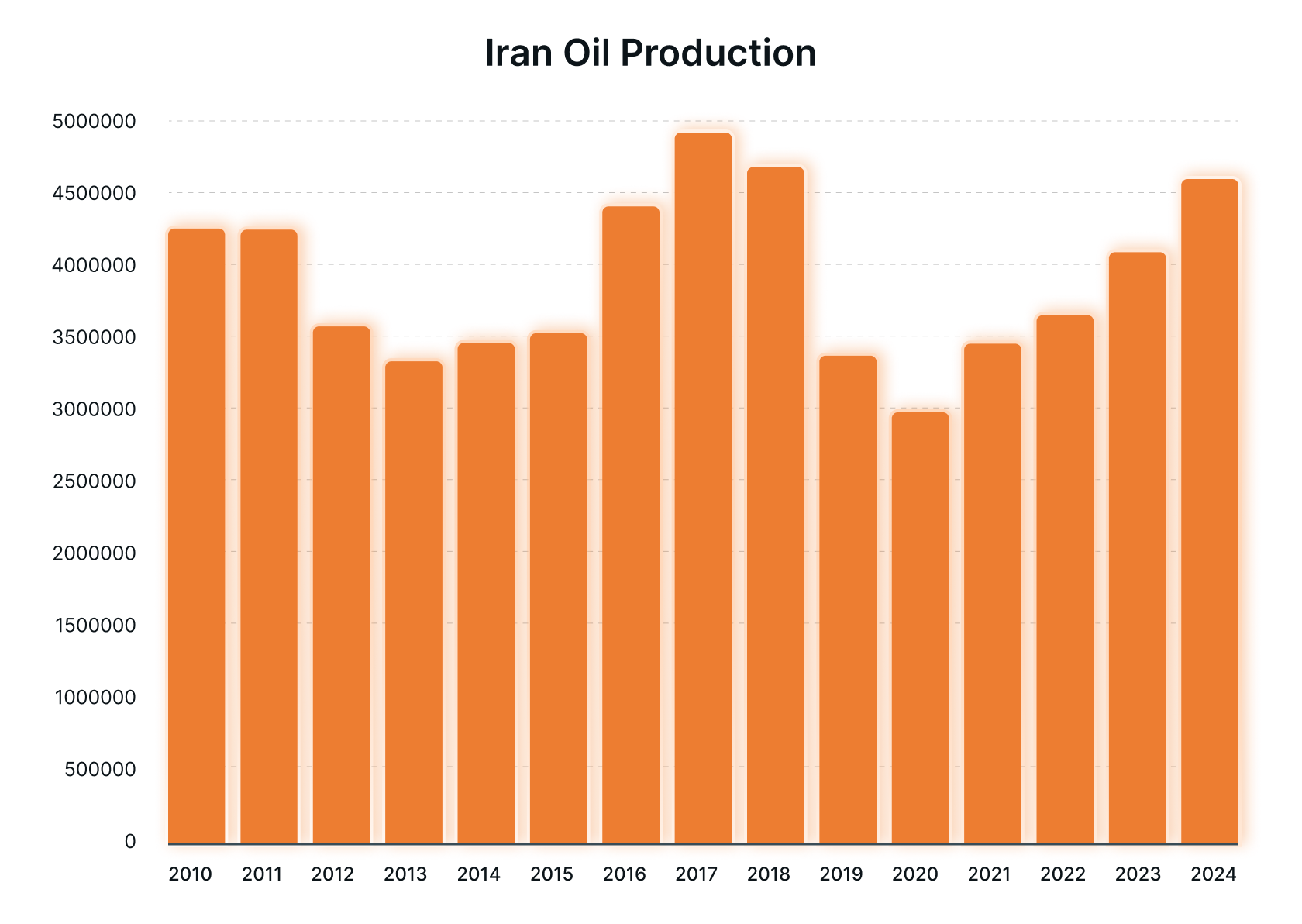
Source: U.S. Energy Information Administration; Leverage Shares analysis
Prior to 2018, under the Joint Comprehensive Plan of Action (JCPOA), Iran maintained a transparent and diversified export portfolio, supplying state-owned enterprises in China, public sector refineries in India, and major OECD markets like South Korea, Japan, Italy, and Greece. Following the U.S. withdrawal from the JCPOA in 2018 and the end of sanctions waivers in 2019, traditional buyers completely exited the market to avoid secondary sanctions.
Excluded from OPEC+ quotas, Iran increased output to capture Asian market share, capitalizing on Saudi-led production cuts. As a result, China now acts as a near-monopsony, absorbing approximately 89% to 91% of Iran’s seaborne crude exports.
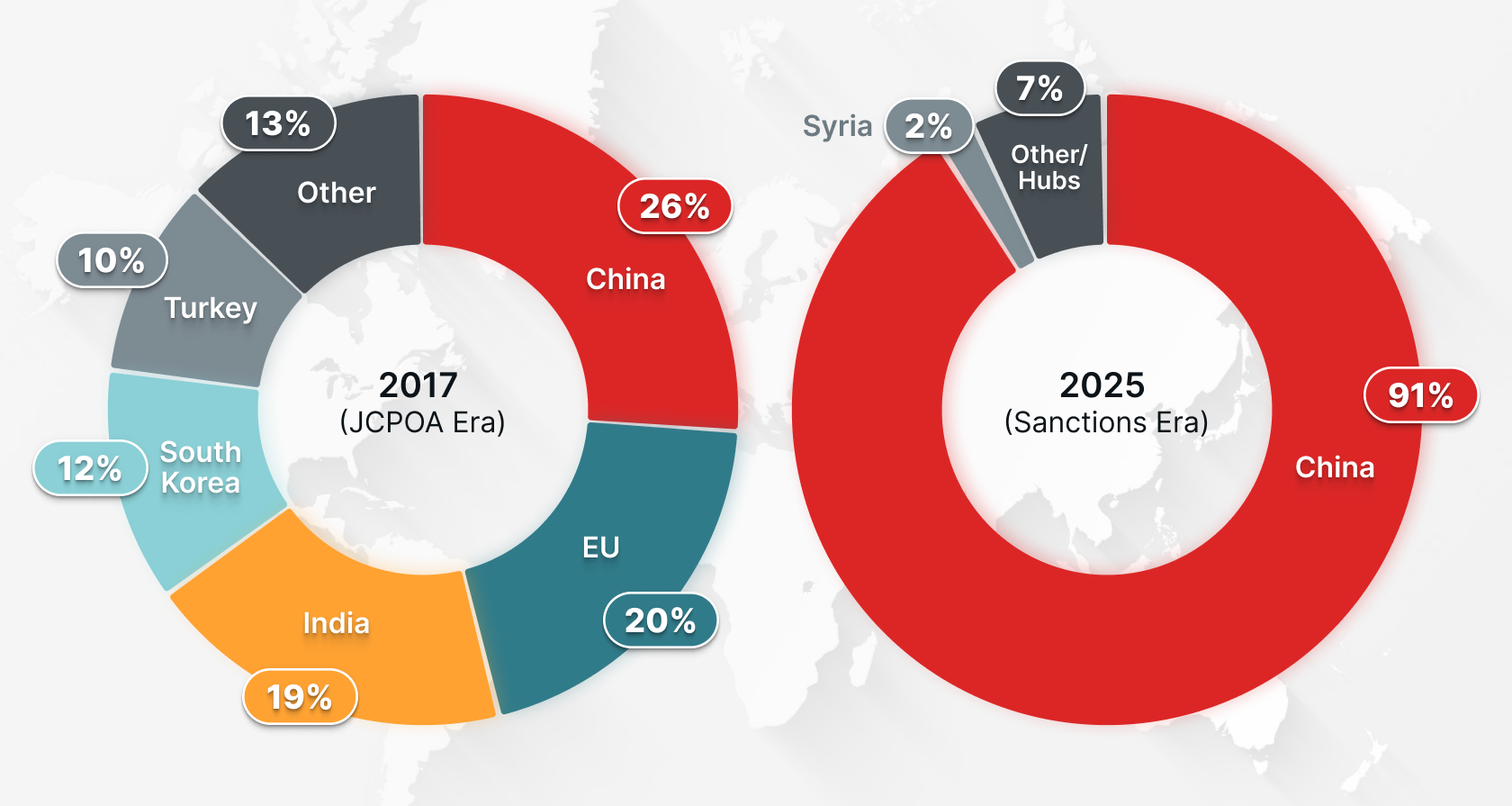
Source: Leverage Shares analysis
This near-monopsony status has yielded China numerous benefits: various sources estimate that China acquires Iranian oil at a 10-15% discount relative to Brent crude, which is paid for via either renminbi (RMB) payments or barter for goods. Despite the U.S.’ "maximum pressure" campaigns, it estimated that Iran generated an estimated $43 to $53 billion in annual oil export revenue by 2023–2024 through steep discounting strategies.
Including imports from Iran, around 50% of China’s oil imports are from the Middle East. India’s oil imports are currently at a similar share: while February continued1 to see about 1 million barrels per day (bpd) in Russian oil flows into India, Saudi Arabia had ramped up shipments that same month to reach 1 million bpd as well. In LNG, around 30% of China’s imports are from the Middle East while India imports around 50% of its LNG needs from Qatar and the UAE in nearly equal measure.
Three major Asian economies are almost entirely dependent on energy imports: over 40% of Taiwan’s crude oil imports — which imports nearly all of its oil — emanates from the Middle East. Japan imports over 90% of its crude oil from the Middle East, with major suppliers including Saudi Arabia, the UAE, Kuwait, and Qatar while South Korea imports 70-75% of its total supply from the Middle East — mostly Saudi Arabia, the UAE, Kuwait, and Iraq.
In LNG, these three economies are somewhat less dependent on the Middle East: while 98% of Taiwan’s LNG needs are met through imports (of which over 83% is used to generate electricity), Qatar supplied over a third2 of its imports. Around 11% of Japan’s LNG imports come from the Middle East while South Korea imports around 20-30%.
Owing to long-standing sanctions, Iran lacks the liquefaction infrastructure needed to export LNG. However, the Strait of Hormuz — a 39-to-97-kilometer-wide stretch of sea between the Musandam Peninsula and the rest of Asia — is the singular maritime exit for Qatar, the UAE, Bahrain and Kuwait. Roughly 13 million bpd passed through3 the Strait of Hormuz in 2025, representing about 31% of all seaborne crude flows — with Asia growing by a larger margin as recipients in recent years than all other energy-importing destinations.
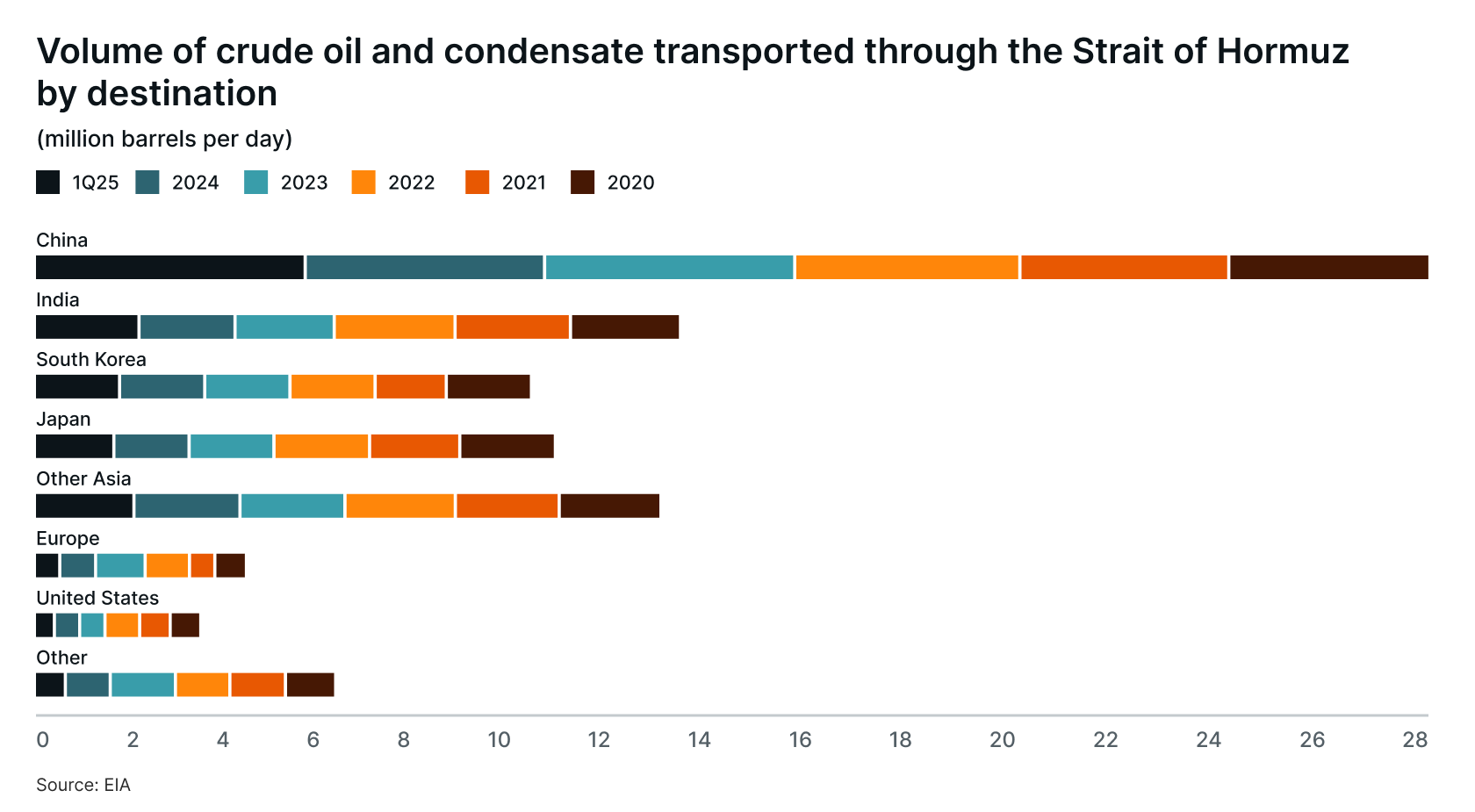
Source: U.S. Energy Information Administration; CNBC. Chart redesign by Leverage Shares
All told, the Strait of Hormuz was a key leg of 20% of flows of crude oil and a similar percentage of LNG worldwide — of which the economies lying east are the dominant recipients. Given that the Strait’s northern coast is Iran, it is well within Iran’s military reach.
The Strait of Hormuz Crisis UnfoldsFollowing a spate of missile and drone attacks on Gulf Cooperation Council countries, Qatar halted LNG production in its Ras Laffan complex while Saudi Arabia’s 550,000 bpd Ras Tanura refinery — the biggest in the world — was also shut down as a precautionary measure. Oil companies in Iraqi Kurdistan — which exported 200,000 bpd via Turkey’s Ceyhan port — also stopped output4 at their fields.
On the 2nd of March, Iranian forces declared the Strait of Hormuz shut and promised to fire on any vessel attempting to traverse it. With shipowners already facing a four or fivefold jump in insurance premiums5 as insurers responded commercially to the launch of U.S. and Israeli military action against Iran over the weekend, thousands of ships6 representing 3-4% of global tonnage are estimated to be sitting idle either in the Persian Gulf or outside the Gulf off the coast of Oman and the UAE.
Iranian forces also promised to attack any oil pipeline that attempts to transport oil out of the region — in a clear reference to two pipelines in Saudi Arabia and the UAE.
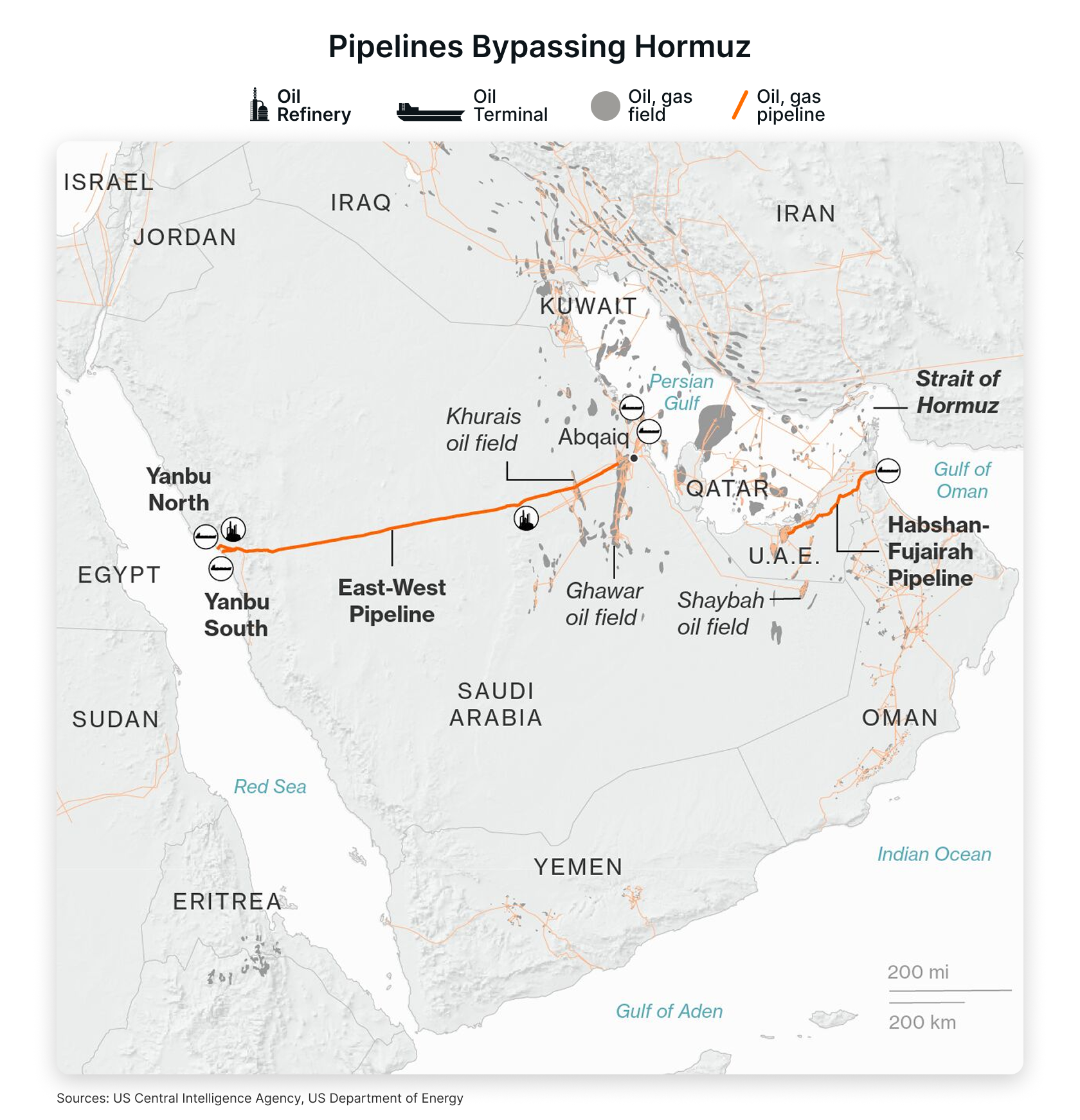
Image redesign by Leverage Shares
At 5 million bpd, i.e. nearly half of the country’s current daily crude production, Saudi Arabia’s East-West Pipeline is capable7 of transporting crude from the Persian Gulf to the Red Sea. Meanwhile, UAE’s Habshan–Fujairah pipeline (ADCOP) has a designed capacity of 1.5 million bpd. The Fujairah terminal had already come under Iranian attack on the 3rd of March, potentially as a warning.
However, while regional oil producers in the Gulf potentially have access to 6.5–7 million bpd of bypass pipeline capacity, LNG exports from Qatar and the UAE have zero alternative maritime or pipeline routes, making 100% of these gas exports vulnerable in the face of Hormuz’s closure.
Why Markets Aren’t Buying Washington’s SolutionOn the 3rd of March, Iran’s forces decreed via state media8 that only Russian- and Chinese-owned ships would be allowed to cross the Strait of Hormuz as a "strategic gesture of gratitude" for Beijing and Moscow’s continued diplomatic and economic support. Given insurers’ risk repricing and this declaration by the Iranian regime, the 300-year-old global maritime news journal Lloyd’s List reports that maritime traffic through the Strait has slowed to a trickle by the 3rd — with the majority headed east.
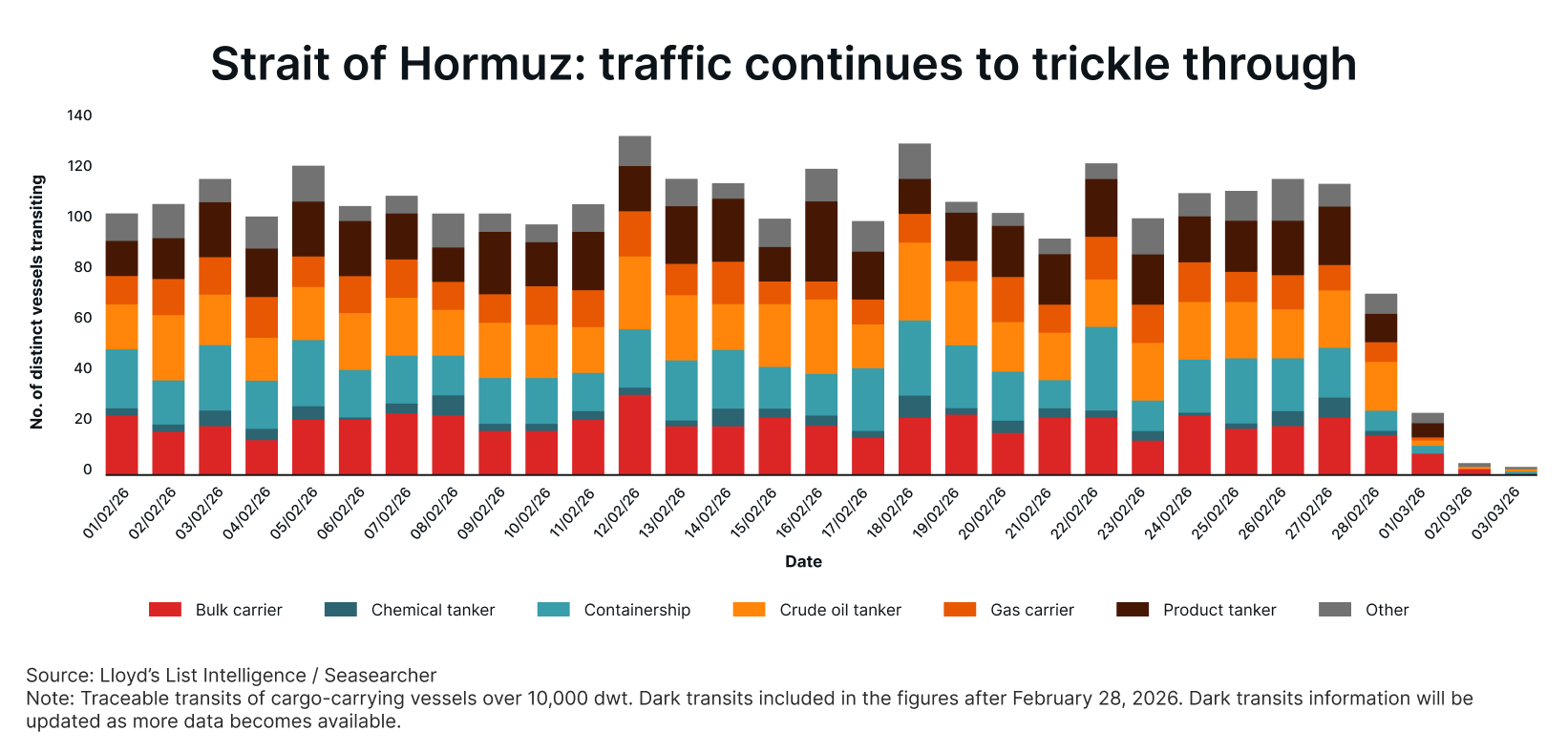
Source: Lloyd's List. Chart redesign by Leverage Shares
On the 2nd of March, the U.S. Navy had reportedly informed9 shipping industry leaders that it lacks the capacity to handle escorts and is not permitted by U.S. law to escort ships that are not U.S.-flagged or -owned or have no U.S. crew — which excludes the vast majority of operators in the world and the region. On the evening of the 3rd, however, U.S. President Donald Trump declared10 on social media that cheap political risk insurance and guarantees of financial security would be provided at "a very reasonable price" by the state-owned U.S. Development Finance Corporation (DFC), which offers loans and investments to businesses worldwide in the interest of U.S. foreign policy. In addition, the U.S. Navy will escort maritime traffic through the Strait of Hormuz.
However, as per Lloyd’s List, this announcement has been met with considerable scepticism11 by the maritime industry: insurers are unsure how the DFC would offer policies in practice and ship operators point to nearly ten years of experience from the Houthi-led shipping lane disruptions in the Red Sea as an exemplar that even the ready availability of best-in-class missile defenses failed to account for or modify the market pressures exerted by insurance rates created by asymmetrical warfare tactics employed in the region.
While eastern economies including India and China are estimated to have around two months of supply of both crude and LNG in storage on average, these supplies are "strategic reserves" meant to be topped up for emergencies in their own territories rather than an "external event" not directly involving them — no matter how the Trump administration might choose to rationalize these events. Given the fact that Iran has walked away from the negotiating table, it can be expected that this will be a long and drawn-out conflict, which will inevitably eat into their coffers and bring pressure on the East’s citizens. A full closure of the Strait of Hormuz would significantly heighten risk premiums on an estimated 20 million bpd of oil and 134 billion cubic meters per annum (bcmpa) of gas supplies in the market, which could potentially drive Brent crude prices above $150 per barrel and cause a global recession — with Asia’s economies particularly vulnerable. On the 3rd of March in the U.S. — which is theoretically self-sufficient in energy availability — petrol and diesel prices12 registered the fastest spike in price since Hurricane Katrina ripped through energy extraction and infrastructure in 2005.
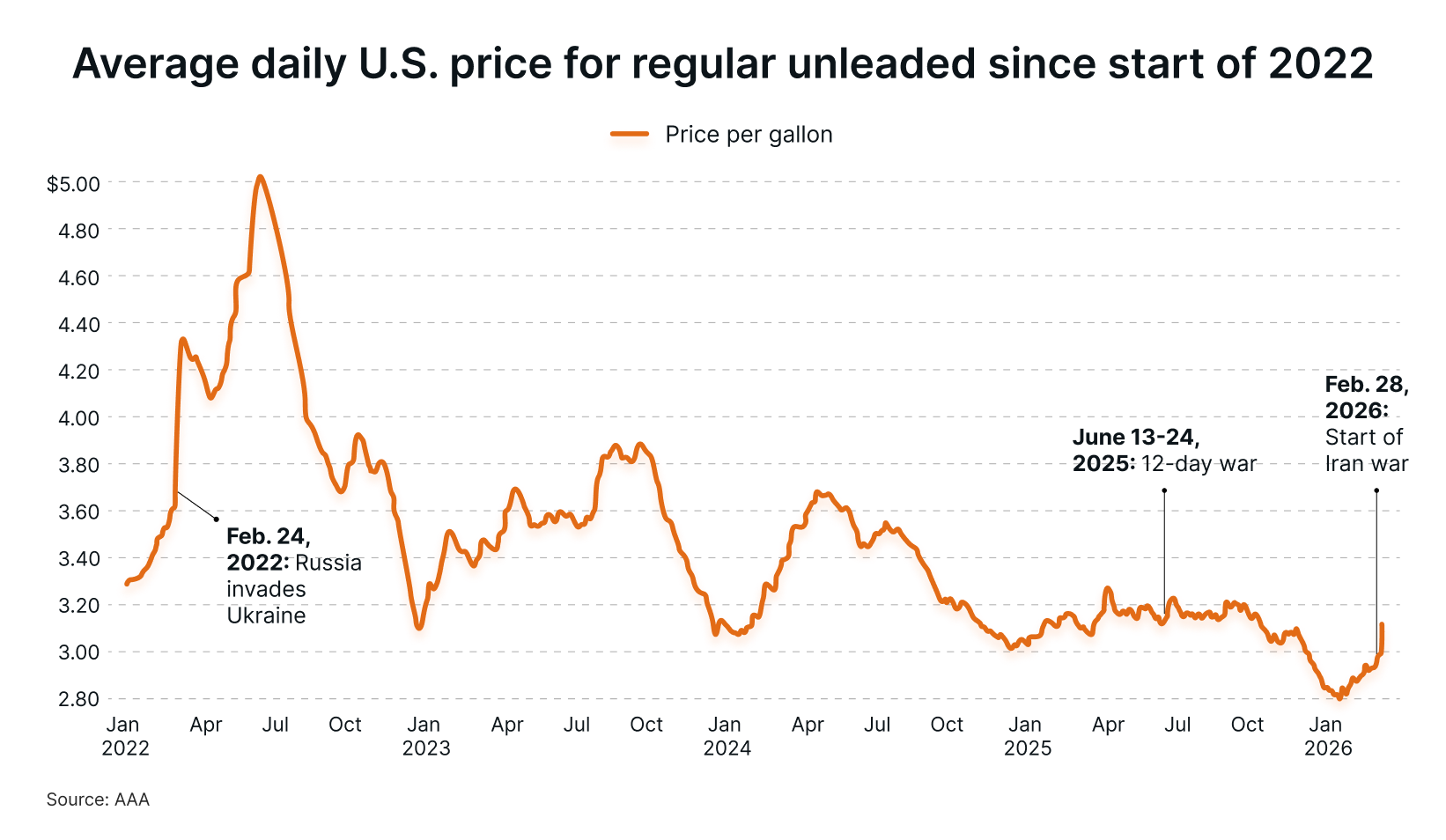
Source: AAA; Associated Press. Chart redesign by Leverage Shares
On the 3rd of March in the U.K., the price of gas — which originates from the Middle East — has doubled13 since the weekend when the conflict began while markets in Japan, Hong Kong, mainland China and South Korea also trended down with some strength.
Given long-term instability, the prospect of a massive Asian pivot to Russian natural gas — sanctions or not — is growing very strong.
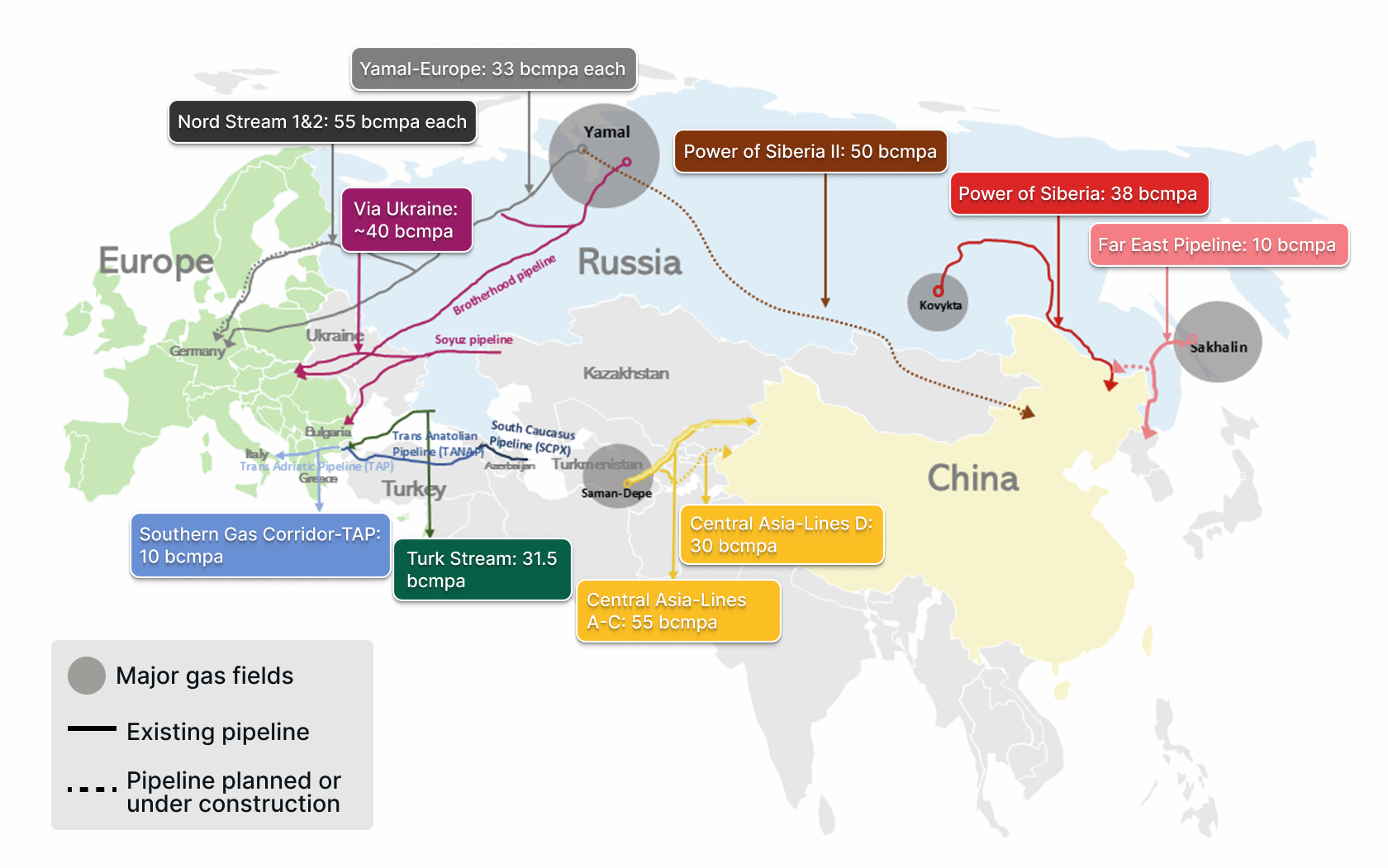
Source: Nature Communications; image redesign by Leverage Shares
While the Trump administration touts that the “tariff deals” executed with Asian economies in particular would be held under pain of new legislative measures currently underway after the U.S. Supreme Court ruled that tariffs imposed so far were invalid14, the ground reality is that Asia’s economies are more sensitive to the needs of their citizens than to the inconsistent policy swings of mercurial politicians in faraway lands who will soon be out of office. If the Russians present an opportunity to alleviate their citizens’ tensions and ire, Asia might soon have no choice but to accept, “deal” or “no deal”.
Footnotes:
"Russia still rules India’s oil chart and Middle East war may keep the flow coming from Moscow", Economic Times, 3 March 2026
"Taiwan Hunting for Alternative LNG Supplies After Qatar Shutdown", Bloomberg, 3 March 2026
"The Strait of Hormuz is facing a blockade. These countries will be most impacted", CNBC, 3 March 2026
"Qatar LNG, Saudi refinery, Israeli oil, gas fields down due to Mideast strikes", Reuters, 2 March 2026
"US, UK and Israeli ships charged three times more than others for Middle East war cover", Lloyd's List, 3 March 2026
"IRGC says Iran in ‘complete control’ of Strait of Hormuz amid Trump threats", Al Jazeera, 4 March 2026
"Aramco Explores Oil Exports From Red Sea to Avoid Hormuz", Bloomberg, 3 March 2026
"Iran to Allow Only Chinese & Russian Vessels Through Strait of Hormuz, Citing Beijing & Moscow's 'Support' in Ongoing Conflict", Republic News, 3 March 2026
"Hormuz naval escort unlikely in the near-term: SSY", Argus Media, 4 March 2026
"Trump promises Gulf ships cheap insurance as London rivals cancel policies", The Telegraph, 4 March 2026
"Trump’s escort announcement met with scepticism as traffic trickles through Strait of Hormuz", Lloyd's List, 4 March 2026
"Gasoline and diesel prices spike overnight as anxious drivers fill up tanks", Associated Press, 4 March 2026
"Gas and oil prices soar and shares tumble on fears conflict could escalate", BBC News, 4 March 2026
"Trump’s New Tariff Gambit Remakes the Global Economy", Leverage Shares, 25 February 2026
Your capital is at risk if you invest. You could lose all your investment. Please see the full risk warning here.
 Market Insights

